Quick Answer
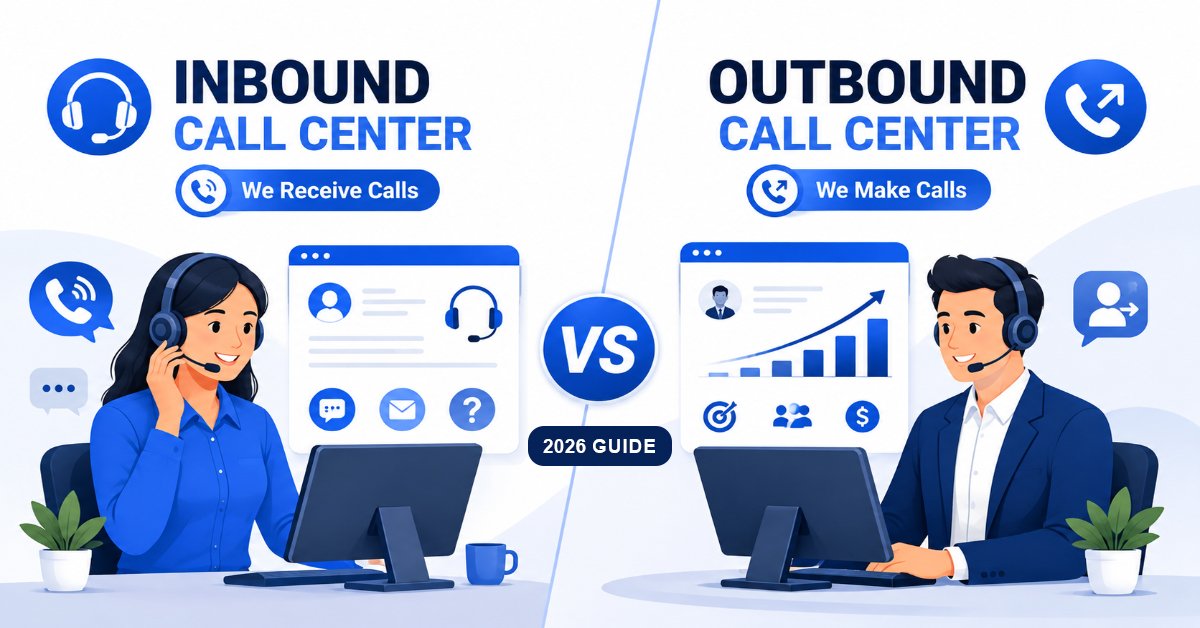
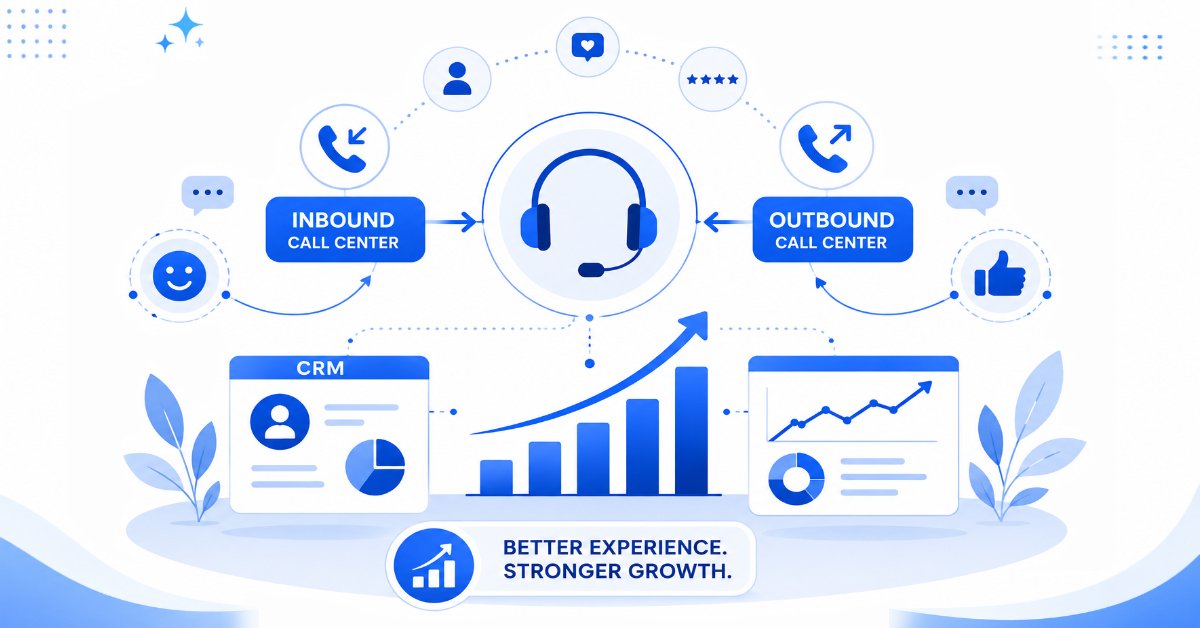
The main difference between an inbound and outbound call center is who initiates the conversation. In an inbound call center, customers contact the business for support, inquiries, or assistance. In an outbound call center, agents proactively reach out to customers for sales, follow-ups, surveys, appointment reminders, or lead generation. Many modern businesses use a hybrid approach that combines both to improve customer experience and business growth.
TL;DR
- An inbound call center handles incoming customer calls for support, billing, technical assistance, and order-related queries.
- An outbound call center makes outgoing calls for sales, lead generation, customer follow-ups, surveys, and collections.
- Inbound teams focus on customer satisfaction, while outbound teams primarily drive sales and customer engagement.
- Both call center types use technologies such as CRM software, IVR systems, AI-powered routing, and call analytics.
- Businesses often choose inbound, outbound, or hybrid call centers depending on their goals, customer expectations, and industry.
- AI, automation, and cloud-based platforms are transforming how inbound and outbound call centers operate in 2026.
Introduction
Whether you’re a business owner looking to improve customer service, a student exploring the BPO industry, or someone preparing for a call center career, understanding the difference between an inbound vs outbound call center is essential.
Although both play a vital role in customer communication, they serve different business objectives. An inbound call center focuses on handling incoming customer inquiries, technical support, billing questions, and service requests. In contrast, an outbound call center proactively reaches out to customers for sales, lead generation, appointment reminders, customer surveys, and follow-up campaigns.
Choosing the right call center model can directly impact customer satisfaction, operational efficiency, sales performance, and long-term business growth. For example, an eCommerce company may rely heavily on inbound support during peak shopping seasons, while a SaaS company might invest in outbound teams to qualify leads and schedule product demonstrations. Many modern organizations also adopt a hybrid call center model that combines the strengths of both approaches to deliver a seamless customer experience.
In recent years, advancements in artificial intelligence (AI), cloud technology, automation, and omnichannel communication have transformed how call centers operate. Today’s businesses are expected to provide faster responses, personalized interactions, and consistent support across multiple channels, making it even more important to understand the strengths and limitations of each call center type.
In this comprehensive guide, you’ll learn:
- What inbound and outbound call centers are
- The key differences between them
- How each type works
- Their benefits and challenges
- Real-world examples from different industries
- How hybrid call centers combine both models
- The latest call center trends in 2026
- Which call center model is best for your business
By the end of this guide, you’ll have a clear understanding of how inbound and outbound call centers work and be better equipped to choose the right approach for your business, career, or learning goals.
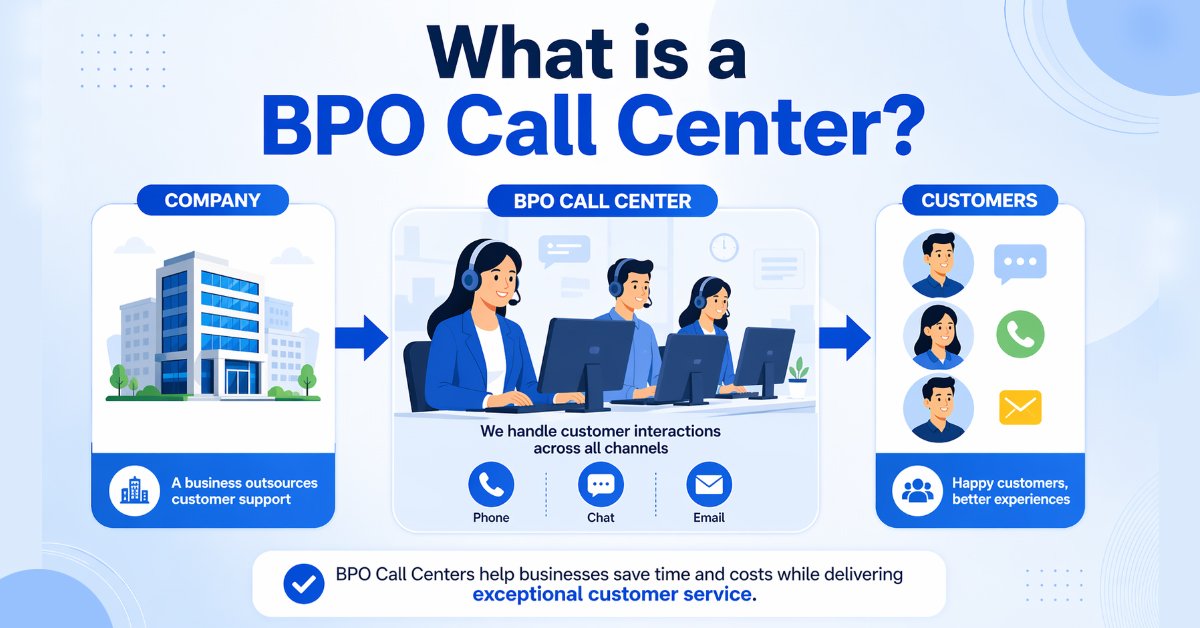
“If you’re new to the industry, our guide explaining what a BPO call center is provides a useful foundation for understanding how outsourced customer support operations work.”
Why Understanding Inbound vs Outbound Call Centers Matters
Every day, millions of customers interact with businesses through phone calls. Whether someone needs help with an online order, wants technical support, books an appointment, or receives a promotional offer, those conversations are usually handled by a call center.
However, not all call centers operate the same way.
Some are designed to answer customer calls and resolve issues, while others are responsible for proactively contacting customers to generate sales, collect feedback, or strengthen business relationships. These two models are known as inbound and outbound call centers.
Understanding the difference is important for more than just customer service professionals. Business owners need to know which model best supports their growth strategy. Job seekers should understand the responsibilities and skills required for each role. Students and beginners often encounter these terms when learning about customer service or the business process outsourcing (BPO) industry.
Choosing the right call center model can directly impact customer satisfaction, operational efficiency, sales performance, and long-term profitability. An eCommerce company, for example, may prioritize fast inbound support during peak shopping seasons, while a software company may invest in outbound teams to qualify leads and schedule product demonstrations.
In recent years, cloud technology, artificial intelligence (AI), automation, and omnichannel communication have further blurred the line between inbound and outbound operations. Many organizations now combine both approaches to deliver a seamless customer experience across phone calls, email, live chat, social media, and messaging apps.
In this guide, you’ll learn:
- What inbound and outbound call centers are
- The key differences between them
- How each type works
- Their advantages and challenges
- Real-world examples from different industries
- Which model is best for your business
- How AI is shaping modern call centers in 2026
Whether you’re starting a business, planning to outsource customer support, preparing for a call center career, or simply trying to understand how customer communication works, this guide will help you make informed decisions.
What Is an Inbound Call Center?
An inbound call center is a customer support facility that manages incoming calls from customers seeking assistance, information, or service. People typically contact an inbound call center when they need assistance, have questions about a product or service, require technical support, want to place an order, or need help resolving an issue.
Unlike outbound operations, inbound call centers focus on responding to customer needs rather than initiating conversations. Their primary objective is to deliver fast, accurate, and helpful support while creating a positive customer experience.
How Does an Inbound Call Center Work?
The process usually begins when a customer calls a company’s support number. The call is first handled by an Interactive Voice Response (IVR) system, which provides menu options such as billing, technical support, or order tracking. Based on the customer’s selection, the system routes the call to the most appropriate agent.
When the agent receives the call, they often have instant access to the customer’s account information through a Customer Relationship Management (CRM) platform. This enables them to understand previous interactions, identify the issue quickly, and provide personalized assistance.
After resolving the customer’s concern, the interaction is documented, and in many cases, the customer is invited to complete a satisfaction survey to help the business improve its service quality.
Common Responsibilities of Inbound Call Center Agents
Inbound agents perform a wide range of customer-focused tasks, including:
- Answering product and service inquiries
- Providing technical support
- Resolving complaints and service issues
- Processing orders and cancellations
- Assisting with billing and payment questions
- Tracking deliveries and order status
- Handling warranty and return requests
- Updating customer account information
Their role requires patience, active listening, empathy, strong communication skills, and effective problem-solving abilities.
Industries That Commonly Use Inbound Call Centers
Inbound call centers are essential across many industries where customer support plays a critical role.
| Industry | Common Inbound Services |
| eCommerce | Order tracking, returns, refunds |
| Banking | Account inquiries, card support, fraud reporting |
| Healthcare | Appointment scheduling, patient support |
| Telecommunications | Billing assistance, network troubleshooting |
| SaaS & Technology | Technical support, onboarding, subscription management |
| Travel & Hospitality | Reservations, cancellations, itinerary changes |
Real-World Example
Imagine you purchase a laptop online, but it arrives with a damaged screen. You call the retailer’s customer support number to request a replacement. An agent verifies your order, checks the warranty, creates a replacement request, and explains the return process.
This interaction is handled entirely by an inbound call center, where the customer initiates the conversation to seek assistance.
Benefits of an Inbound Call Center
Businesses invest in inbound call centers because they help:
- Improve customer satisfaction and loyalty
- Resolve issues quickly
- Build long-term customer relationships
- Increase customer retention
- Strengthen brand reputation
- Deliver consistent support across multiple communication channels
When customers receive timely and effective assistance, they are more likely to continue doing business with the company and recommend it to others.
What Is an Outbound Call Center?
An outbound call center is a customer communication operation where agents initiate outgoing calls to existing or potential customers. Instead of waiting for customers to contact the business, outbound teams proactively reach out to achieve specific business objectives such as generating sales, qualifying leads, scheduling appointments, conducting surveys, collecting payments, or following up after previous interactions.
Outbound call centers play a crucial role in helping businesses expand their customer base, strengthen relationships, and increase revenue.
How Does an Outbound Call Center Work?
Outbound campaigns usually begin with a list of customer contacts stored in a CRM system or lead database. Depending on the campaign, agents may use predictive, progressive, or power dialers that automatically place calls and reduce manual dialing time.
Before each conversation, agents review available customer information to personalize the interaction. They then introduce the purpose of the call, answer questions, address objections, and work toward a specific goal, such as booking a meeting, completing a sale, or gathering feedback.
After the call ends, the outcome is recorded in the CRM, allowing businesses to monitor campaign performance and schedule future follow-ups when needed.
Common Responsibilities of Outbound Call Center Agents
Typical outbound responsibilities include:
- Lead generation and qualification
- Sales and product promotions
- Appointment scheduling
- Customer follow-up calls
- Market research and surveys
- Payment reminders and collections
- Customer retention campaigns
- Renewal and subscription reminders
Success in outbound roles often depends on persuasive communication, confidence, resilience, and the ability to build rapport quickly while understanding customer needs.
Industries That Commonly Use Outbound Call Centers
Outbound call centers support many industries focused on customer acquisition and engagement.
| Industry | Common Outbound Services |
| Insurance | Policy renewals, new policy sales |
| Real Estate | Lead qualification, property follow-ups |
| Education | Admission counseling, enrollment support |
| SaaS | Product demonstrations, trial follow-ups |
| Financial Services | Loan offers, payment reminders |
| Nonprofit Organizations | Fundraising and donor outreach |
Real-World Example
Suppose a software company notices that a visitor downloaded a free trial of its product but hasn’t activated the account. A sales representative contacts the customer to answer questions, explain key features, and offer assistance with setup.
Because the company initiated the conversation, this is an outbound call center interaction.
Why Outbound Call Centers Matter
Outbound operations help businesses stay proactive rather than reactive. Instead of waiting for customers to make the next move, companies can nurture leads, recover inactive customers, improve campaign performance, and build stronger long-term relationships.
When combined with customer insights, CRM data, and AI-powered dialing tools, outbound call centers become an effective channel for sustainable business growth.
Inbound vs Outbound Call Center: Key Differences
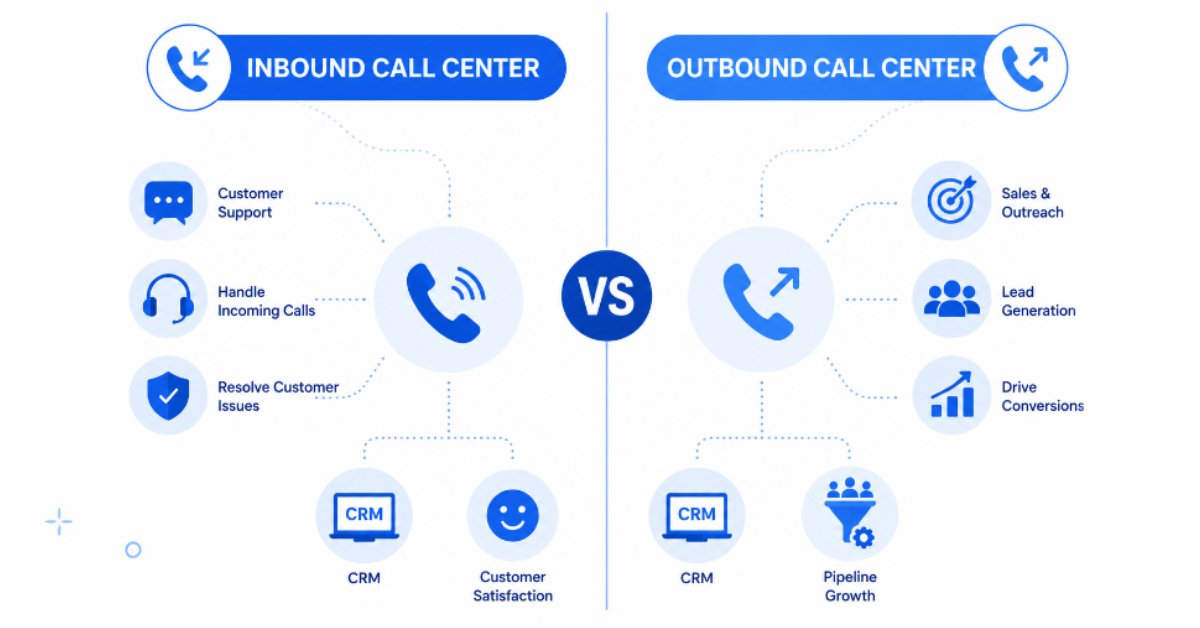
Understanding the difference between inbound and outbound call centers goes beyond knowing who initiates the call. While inbound teams focus on helping customers who contact the business, outbound teams proactively engage customers to achieve specific business goals, such as generating sales, conducting surveys, or following up on previous interactions.
Both models play an essential role in customer communication, but they differ in objectives, workflows, performance metrics, and the skills required to succeed.
The following comparison highlights the key differences.
| Feature | Inbound Call Center | Outbound Call Center |
| Who Initiates the Call? | Customer | Business or agent |
| Primary Purpose | Customer support and issue resolution | Sales, lead generation, follow-ups, and customer outreach |
| Customer Intent | Needs assistance or information | Receives proactive communication from the business |
| Typical Activities | Technical support, billing, order tracking, complaints | Sales calls, appointment scheduling, surveys, collections |
| Communication Style | Reactive | Proactive |
| Primary Goal | Improve customer satisfaction and retention | Increase revenue and customer engagement |
| Key Performance Indicators (KPIs) | First Call Resolution (FCR), Average Handle Time (AHT), Customer Satisfaction (CSAT) | Conversion Rate, Sales Volume, Contact Rate, Revenue Generated |
| Agent Skills | Active listening, empathy, patience, problem-solving | Persuasion, negotiation, confidence, objection handling |
| Technology Used | IVR, Automatic Call Distribution (ACD), CRM, AI routing | CRM, Predictive Dialer, Power Dialer, AI Dialing, Campaign Management |
| Customer Relationship | Strengthens existing relationships | Builds new relationships and nurtures prospects |
| Success Measurement | Customer experience and issue resolution | Campaign performance and business growth |
| Industries | Banking, healthcare, telecom, eCommerce, SaaS | Insurance, education, real estate, finance, fundraising |
| Business Impact | Higher customer loyalty and retention | Higher sales and lead generation |
| AI Applications (2026) | AI chatbots, intelligent call routing, agent assistance | Predictive dialing, AI lead scoring, conversation analytics |
Quick Comparison
Think of an inbound call center as a customer help desk that responds when customers need assistance.
An outbound call center, on the other hand, acts as a business growth engine, proactively reaching customers to create opportunities, generate revenue, or maintain long-term relationships.
Many successful organizations combine both approaches to deliver exceptional customer experiences while supporting sustainable growth.
How Does an Inbound Call Center Work?
An inbound call center follows a structured process to ensure every customer receives prompt and efficient support. Modern cloud-based call centers use automation and AI to reduce wait times and improve service quality.
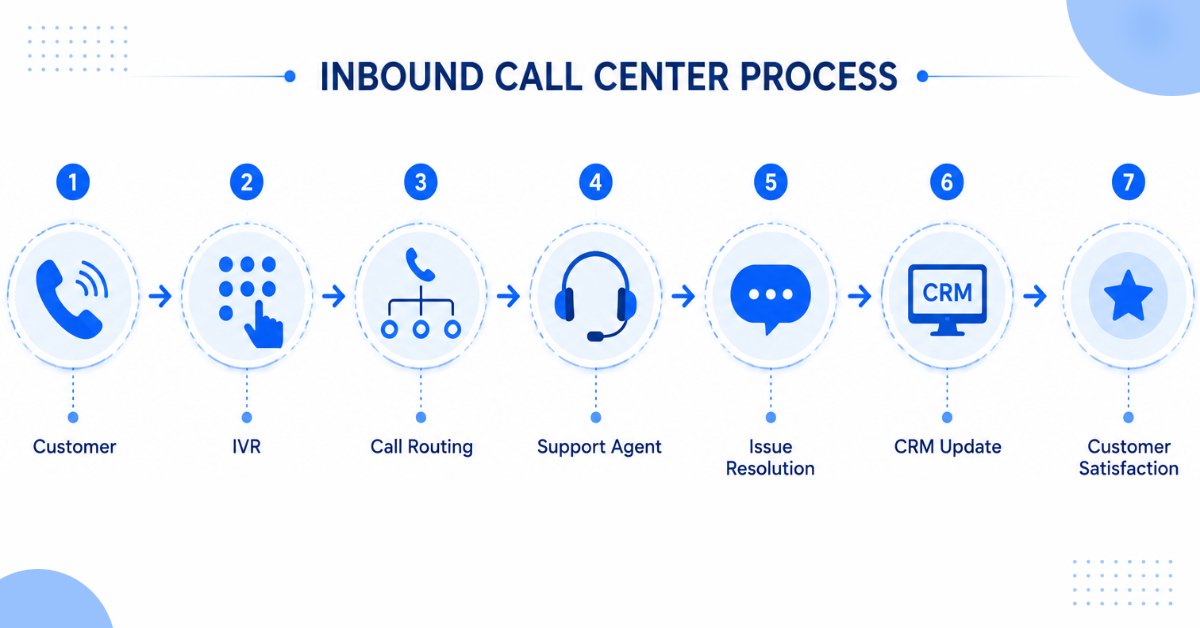
Step 1: Customer Contacts the Business
The process begins when a customer calls the company’s support number because they need assistance with a product, service, billing issue, technical problem, or general inquiry.
Step 2: IVR Welcomes the Caller
The caller is greeted by an Interactive Voice Response (IVR) system, which provides menu options such as:
- Press 1 for Sales
- Press 2 for Technical Support
- Press 3 for Billing
- Press 4 for Existing Orders
This helps route customers to the correct department.
Step 3: Intelligent Call Routing
An Automatic Call Distributor (ACD) analyzes the caller’s request and connects them with the most suitable agent based on factors such as:
- Department
- Language preference
- Agent expertise
- Priority level
- Customer status
Step 4: Agent Reviews Customer Information
Before speaking with the customer, the agent’s CRM dashboard displays relevant information, including:
- Previous interactions
- Purchase history
- Support tickets
- Account details
Having this information readily available reduces resolution time and improves personalization.
Step 5: Issue Resolution
The agent listens carefully, identifies the problem, and provides the appropriate solution.
Depending on the situation, the agent may:
- Troubleshoot technical issues
- Update account information
- Process refunds
- Schedule appointments
- Escalate complex cases
Step 6: Call Documentation
After the conversation, the agent records:
- Customer issue
- Resolution provided
- Follow-up actions
- Internal notes
This ensures future interactions remain consistent.
Step 7: Customer Feedback
Many organizations invite customers to rate their experience through a short survey.
These responses help improve service quality and identify training opportunities.
Typical Inbound Call Flow
Customer Calls
↓
IVR System
↓
Automatic Call Routing
↓
Available Agent
↓
CRM Information
↓
Issue Resolution
↓
Call Notes
↓
Customer Feedback
How Does an Outbound Call Center Work?
Unlike inbound operations, outbound call centers proactively contact customers to achieve predefined business objectives.
Today’s outbound teams rely heavily on CRM platforms, AI-powered dialing systems, and campaign analytics to maximize efficiency.
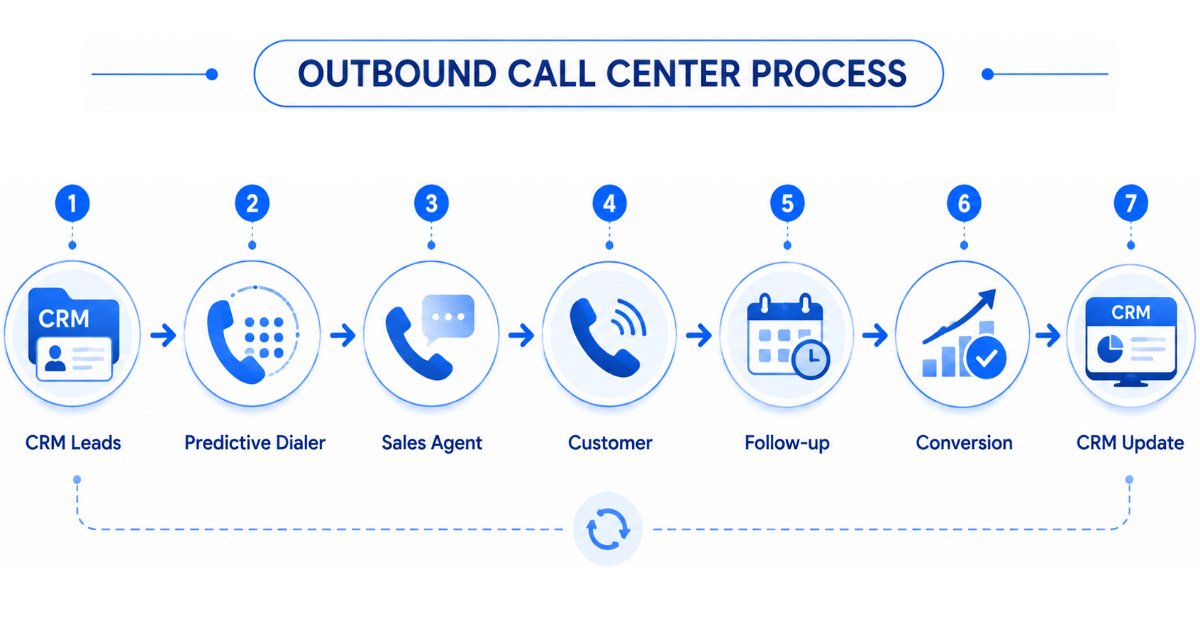
Step 1: Campaign Planning
Managers define campaign objectives, such as:
- Lead generation
- Product promotion
- Customer retention
- Survey collection
- Appointment reminders
Step 2: Customer List Preparation
The CRM provides a targeted list of contacts based on campaign criteria.
These may include:
- Existing customers
- Potential leads
- Trial users
- Renewal candidates
- Dormant customers
Step 3: Automated Dialing
Instead of manually dialing each number, agents often use:
- Predictive Dialers
- Progressive Dialers
- Power Dialers
These systems significantly increase productivity.
Step 4: Customer Conversation
Agents introduce themselves, explain the purpose of the call, and guide the conversation toward the campaign objective.
Successful outbound agents focus on understanding customer needs rather than delivering scripted sales pitches.
Step 5: Qualification or Action
Depending on the campaign, the call may result in:
- A completed sale
- Qualified lead
- Appointment booking
- Survey response
- Payment confirmation
- Follow-up request
Step 6: CRM Update
After each interaction, the outcome is recorded, including:
- Customer response
- Call duration
- Next action
- Follow-up date
- Conversion status
Step 7: Performance Reporting
Managers monitor campaign success using metrics such as:
- Conversion Rate
- Contact Rate
- Revenue Generated
- Average Talk Time
- Follow-up Success Rate
Typical Outbound Call Flow
Campaign Planning
↓
Customer Database
↓
Predictive Dialer
↓
Agent Conversation
↓
Lead Qualification
↓
CRM Update
↓
Follow-up
↓
Performance Reporting
Benefits of Inbound Call Centers
An effective inbound call center does more than answer phone calls—it strengthens customer relationships and protects a company’s reputation.
1. Higher Customer Satisfaction
Fast and accurate support creates positive customer experiences and builds trust.
2. Improved Customer Retention
Customers are more likely to remain loyal when their concerns are resolved quickly and professionally.
3. Better Brand Reputation
Exceptional customer service often leads to positive reviews, referrals, and long-term brand credibility.
4. Faster Problem Resolution
AI-assisted routing and CRM integration help agents solve issues more efficiently.
5. Valuable Customer Insights
Every interaction provides feedback that businesses can use to improve products, services, and internal processes.
6. Increased Customer Lifetime Value
Satisfied customers tend to purchase again, upgrade services, and recommend the business to others.
Providing excellent customer support is more than resolving issues quickly—it also creates long-term customer loyalty. Research from the Qualtrics XM Institute shows that organizations delivering better customer experiences are more likely to improve customer satisfaction and retention.
Benefits of Outbound Call Centers
Outbound operations help organizations actively grow their business instead of waiting for customers to initiate contact.
1. Increased Sales Opportunities
Outbound campaigns enable businesses to introduce products and services to qualified prospects.
2. Better Lead Generation
Agents identify interested prospects before passing them to the sales team, improving overall conversion rates.
3. Stronger Customer Relationships
Regular follow-up calls demonstrate that a business values its customers beyond the initial sale.
4. Improved Customer Retention
Proactive communication helps reduce customer churn by addressing concerns before they become larger issues.
5. Efficient Market Research
Outbound surveys provide valuable insights into customer preferences, product satisfaction, and emerging market trends.
6. Higher Revenue Growth
Well-executed outbound campaigns create new business opportunities while increasing the value of existing customer relationships.
Challenges of Inbound Call Centers
Every inbound call center aims to provide fast, reliable, and high-quality customer support. However, handling large volumes of customer inquiries while maintaining consistent service standards presents several operational challenges. Understanding these challenges—and how to overcome them—helps businesses improve customer satisfaction and overall efficiency.
Common Challenges
High Call Volumes
Inbound call centers often experience spikes in call traffic during product launches, promotional campaigns, holidays, or service disruptions. When demand exceeds available agents, customers may face long wait times and abandoned calls.
Long Customer Wait Times
Extended wait times can frustrate customers and negatively impact their perception of the brand. If callers cannot reach an agent quickly, they may switch to a competitor or leave negative feedback.
Handling Complex Customer Issues
Not every inquiry has a simple solution. Technical problems, billing disputes, and account-related concerns often require experienced agents and access to multiple systems, increasing the average handling time.
Agent Burnout
Handling customer complaints and emotionally demanding conversations throughout the day can lead to stress and fatigue. Burnout affects productivity, employee morale, and service quality.
Maintaining Consistent Service Quality
As businesses grow, ensuring that every customer receives the same level of service becomes increasingly difficult. Differences in agent experience and communication skills can result in inconsistent customer experiences.
Solutions to Overcome Inbound Challenges
Businesses can reduce these challenges by combining well-trained teams with modern customer service technology.
- Use AI-powered call routing to connect customers with the most qualified agent, reducing transfer rates and wait times.
- Offer self-service tools like IVR systems and knowledge bases so customers can resolve common issues without speaking to a live agent.
- Provide continuous agent training to improve product knowledge, communication skills, and problem-solving abilities.
- Monitor workforce demand using forecasting tools so staffing levels match expected call volumes during peak periods.
- Offer callback options instead of keeping customers on hold for long periods.
- Track key performance indicators (KPIs) such as First Call Resolution (FCR), Average Handle Time (AHT), and Customer Satisfaction (CSAT) to identify improvement opportunities.
- Support employee well-being through coaching, regular breaks, and realistic performance expectations to reduce burnout and improve retention.
By proactively addressing these challenges, businesses can create a more efficient inbound call center while delivering a better customer experience.
Challenges of Outbound Call Centers
Unlike inbound operations, outbound call centers initiate conversations with customers. While this approach creates opportunities for sales, lead generation, and customer engagement, it also introduces unique operational and compliance challenges.
Common Challenges
Low Contact Rates
Many outbound calls go unanswered because customers are unavailable, ignore unknown numbers, or use call-blocking features. Low contact rates reduce campaign efficiency.
Customer Rejection
Even when customers answer the phone, they may not be interested in the offer. Repeated rejection can affect agent motivation and overall campaign performance.
Poor Lead Quality
Outbound campaigns are only as effective as the quality of the contact list. Outdated or poorly targeted data often results in wasted time and lower conversion rates.
Regulatory Compliance
Businesses must comply with telemarketing laws, data privacy regulations, and customer consent requirements. Failure to follow these rules can lead to legal penalties and damage to the company’s reputation.
Maintaining Agent Motivation
Outbound agents often work toward sales or campaign targets. High rejection rates and performance pressure can impact morale if adequate support and recognition are not provided.
Solutions to Overcome Outbound Challenges
Successful outbound call centers overcome these challenges by combining skilled agents, high-quality customer data, and intelligent technology.
- Use CRM and AI-powered lead scoring to prioritize prospects who are more likely to respond positively.
- Keep customer databases updated by regularly removing duplicate, outdated, or inaccurate records.
- Schedule calls strategically based on customer preferences and historical response patterns to improve contact rates.
- Provide sales and communication training so agents can confidently handle objections and build meaningful conversations.
- Follow all applicable telemarketing and data privacy regulations to ensure ethical customer outreach and protect brand reputation.
- Monitor campaign performance using metrics such as Contact Rate, Conversion Rate, Cost per Acquisition (CPA), and Return on Investment (ROI).
- Recognize and reward high-performing agents to improve motivation, engagement, and long-term retention.
With the right strategy, technology, and training, outbound call centers can improve campaign effectiveness while building stronger customer relationships and supporting sustainable business growth.
Organizations running outbound calling campaigns should also comply with applicable telemarketing regulations. The Federal Trade Commission (FTC) provides guidance through the Telemarketing Sales Rule (TSR) to help businesses follow consumer protection requirements and responsible calling practices
Expert Insight
Many businesses mistakenly view inbound and outbound call centers as competing models. In reality, they deliver the best results when they work together.
For example, an inbound team may resolve a customer’s issue and identify interest in an additional service. That information can be shared with the outbound sales team, which follows up later with a personalized offer. Similarly, feedback collected through outbound surveys can help inbound teams improve future customer interactions.
Rather than choosing one over the other, successful organizations design customer journeys where inbound support and outbound engagement complement each other. This integrated approach improves customer satisfaction, strengthens loyalty, and creates new growth opportunities without sacrificing service quality.
Inbound Call Center Examples
Inbound call centers are used in industries where providing timely customer support is essential for maintaining customer satisfaction and loyalty. While their core function remains the same—handling incoming customer calls—the services they provide vary depending on the industry.
Here are some real-world examples of how inbound call centers operate.
1. eCommerce Customer Support
Online retailers receive thousands of customer inquiries every day regarding orders, payments, deliveries, returns, and refunds.
A customer might call to:
- Track an order
- Report a damaged product
- Request a replacement
- Cancel an order
- Ask about return policies
Example:
A customer orders a smartphone but receives the wrong color. They contact customer support, where an agent verifies the purchase, arranges a replacement, and provides return instructions.
In this case, the customer initiated the conversation, making it an inbound call center interaction.
2. Banking and Financial Services
Banks rely heavily on inbound call centers to provide secure and reliable customer support.
Common requests include:
- Account balance inquiries
- Debit or credit card blocking
- Online banking assistance
- Loan information
- Fraud reporting
- Credit card disputes
Since financial information is sensitive, agents follow strict verification procedures before discussing account details.
3. Healthcare
Hospitals, clinics, and diagnostic centers use inbound call centers to improve patient communication.
Patients may call to:
- Schedule appointments
- Reschedule consultations
- Request test reports
- Ask about prescriptions
- Confirm doctor availability
Efficient call handling helps reduce administrative workload while improving the patient experience.
4. Telecommunications
Internet service providers and mobile network operators receive large volumes of technical support requests.
Typical customer concerns include:
- Internet connectivity issues
- SIM activation
- Billing questions
- Recharge problems
- Network outages
- Plan upgrades
Technical support agents often use remote diagnostic tools to identify and resolve issues during the call.
5. SaaS and Software Companies
Software providers use inbound support teams to assist users throughout their customer journey.
Support requests may include:
- Password resets
- Software installation
- Subscription management
- Bug reporting
- Product guidance
- Feature explanations
Providing fast and knowledgeable support helps improve customer retention and reduce churn.
Outbound Call Center Examples
Outbound call centers help businesses proactively engage with customers, generate revenue, and maintain long-term relationships.
Rather than waiting for customers to contact the company, agents reach out to achieve predefined objectives.
Here are some common examples.
1. Insurance Sales
Insurance companies frequently contact prospective and existing customers to:
- Introduce new policies
- Explain coverage options
- Offer renewals
- Promote premium upgrades
These conversations help customers understand available plans while increasing policy renewals and new sales.
2. Real Estate
Real estate agencies use outbound teams to qualify leads generated through websites, social media, or property portals.
Agents may:
- Confirm buyer requirements
- Schedule property visits
- Provide pricing information
- Follow up after inquiries
Timely follow-ups often improve conversion rates significantly.
3. SaaS Sales Teams
Software companies commonly use outbound calls after prospects download free trials or attend webinars.
An outbound representative may:
- Ask about business requirements
- Explain product features
- Schedule live demonstrations
- Assist with onboarding
This personalized approach helps convert trial users into paying customers.
4. Educational Institutions
Universities, colleges, and online learning platforms often use outbound call centers during admission seasons.
Agents contact prospective students to:
- Explain courses
- Discuss eligibility
- Answer admission questions
- Provide scholarship information
- Complete enrollment formalities
5. Customer Feedback Campaigns
Businesses regularly conduct outbound surveys to understand customer satisfaction.
Questions may cover:
- Product quality
- Service experience
- Delivery performance
- Suggestions for improvement
The collected insights help businesses improve products and customer service.
6. Payment Reminder Services
Banks, financial institutions, and utility providers often remind customers about upcoming payments.
Instead of waiting until an account becomes overdue, agents proactively contact customers to:
- Remind them of due dates
- Explain payment options
- Prevent service interruptions
This improves collection rates while maintaining positive customer relationships.
Can One Call Center Handle Both Inbound and Outbound Calls?
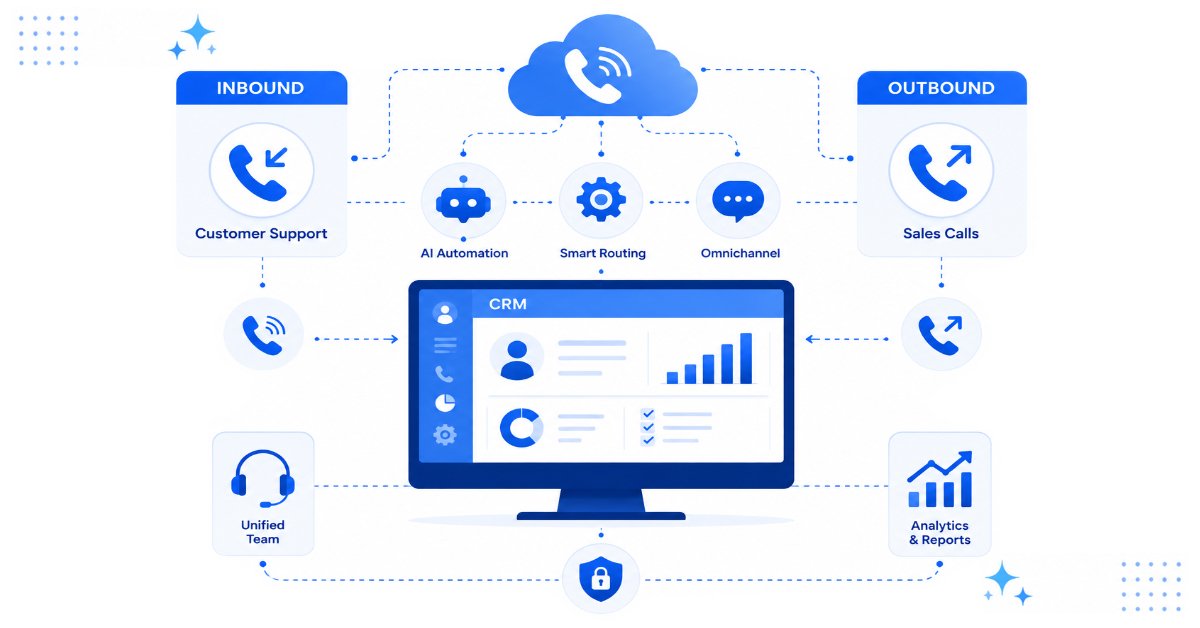
Yes. Many modern organizations no longer separate inbound and outbound operations. Instead, they operate hybrid (also called blended) call centers that manage both incoming and outgoing customer communications using the same technology platform.
A hybrid call center allows businesses to provide customer support while also conducting proactive outreach whenever needed.
How a Hybrid Call Center Works
A blended call center intelligently balances workloads throughout the day.
For example:
- During busy hours, agents primarily answer incoming customer calls.
- During quieter periods, the same agents switch to outbound campaigns such as follow-up calls, appointment reminders, customer surveys, or lead nurturing.
Modern workforce management software automatically assigns tasks based on call volume, agent availability, and business priorities.
Benefits of a Hybrid Call Center
Better Resource Utilization
Instead of leaving agents idle during slow periods, businesses can assign outbound activities that add value.
Improved Customer Experience
Customers receive support when they need it while also benefiting from proactive communication, such as renewal reminders or follow-up calls.
Increased Revenue Opportunities
Support conversations often reveal sales opportunities.
For example, if an inbound customer expresses interest in upgrading their service, the outbound sales team can follow up with personalized recommendations.
Greater Operational Flexibility
Businesses can quickly adapt staffing based on seasonal demand, marketing campaigns, or unexpected increases in customer inquiries.
Lower Operating Costs
Combining inbound and outbound teams reduces infrastructure duplication and improves workforce efficiency.
Challenges of Running a Hybrid Call Center
Although hybrid models offer many advantages, they also introduce operational challenges.
Agent Training
Employees must be comfortable handling both customer support and outbound communication.
This requires broader product knowledge, stronger communication skills, and ongoing coaching.
Workforce Planning
Managers need to carefully balance incoming support demand with outbound campaign schedules.
Poor planning can increase customer wait times or reduce campaign performance.
Performance Measurement
Inbound and outbound teams have different success metrics.
Hybrid call centers must evaluate agents fairly by considering multiple KPIs rather than relying on a single performance indicator.
Modern cloud contact center platforms allow organizations to manage both inbound customer support and outbound sales activities from a single system. Google Cloud Customer Engagement explains how AI-powered contact center solutions help businesses improve efficiency and customer experience.
Industries That Benefit Most from Hybrid Call Centers
Hybrid call centers are particularly valuable in industries where customer service and sales work closely together.
Examples include:
| Industry | How Hybrid Call Centers Add Value |
| eCommerce | Customer support, order follow-ups, loyalty campaigns |
| SaaS | Technical support, product demos, subscription renewals |
| Healthcare | Appointment scheduling, reminder calls, patient assistance |
| Banking | Account support, loan follow-ups, fraud prevention |
| Insurance | Claims assistance, policy renewals, cross-selling |
| Telecommunications | Technical support, service upgrades, retention campaigns |
Inbound vs Outbound Call Center: Which One Does Your Business Need?
Choosing the right call center model depends on your business objectives, customer expectations, and growth strategy.
Rather than asking which model is “better,” the more important question is:
Which model best supports your current business goals?
The table below provides practical recommendations.
| Business Type | Recommended Model | Why? |
| Startup | Outbound | Build awareness, generate leads, acquire first customers |
| Small Business | Hybrid | Balance customer support with business growth |
| eCommerce | Hybrid | Handle customer inquiries while promoting repeat purchases |
| SaaS Company | Hybrid | Provide technical support and convert trial users |
| Healthcare | Inbound | Deliver reliable patient assistance and appointment management |
| Banking & Finance | Inbound | Prioritize secure customer service and account support |
| Real Estate | Outbound | Qualify leads and schedule property visits |
| Educational Institutions | Outbound | Increase admissions and student engagement |
| Enterprise Organizations | Hybrid | Support multiple customer communication channels efficiently |
Decision Guide
Choose an Inbound Call Center if your priority is:
- Delivering excellent customer service
- Resolving technical issues
- Managing customer complaints
- Increasing customer retention
- Building long-term trust
Choose an Outbound Call Center if your priority is:
- Generating sales
- Finding new customers
- Conducting marketing campaigns
- Scheduling appointments
- Increasing revenue
Choose a Hybrid Call Center if your goal is to:
- Combine customer support with business growth
- Improve operational efficiency
- Maximize agent productivity
- Deliver a seamless customer experience
- Build stronger long-term customer relationships
Expert Tip
Many growing businesses begin with either inbound or outbound operations, but as they scale, they often transition to a hybrid model. This approach allows them to maintain excellent customer service while creating new opportunities for sales and customer engagement. If your business plans to expand over the next few years, designing your call center strategy with future scalability in mind can save time, reduce costs, and improve the overall customer experience.
Inbound vs Outbound Call Center: At a Glance
If you’re short on time, the table below summarizes the key differences between inbound and outbound call centers to help you quickly understand which model best fits your business needs.
| Aspect | Inbound Call Center | Outbound Call Center |
| Purpose | Resolve customer issues and provide support | Generate leads, sales, and customer engagement |
| Call Initiator | Customer | Business or agent |
| Primary Focus | Customer satisfaction and retention | Revenue growth and customer acquisition |
| Common Activities | Technical support, billing, order tracking, complaints | Sales calls, follow-ups, surveys, appointment scheduling |
| Customer Relationship | Responds to customer requests | Proactively reaches out to customers |
| Success Metrics | CSAT, FCR, AHT, Customer Retention | Conversion Rate, Sales, Contact Rate, Revenue |
| Best For | Businesses prioritizing customer service | Businesses focused on sales and lead generation |
| Typical Industries | Banking, Healthcare, Telecom, eCommerce, SaaS | Insurance, Real Estate, Education, Financial Services |
| Technology | IVR, ACD, CRM, AI Routing | CRM, Predictive Dialer, AI Dialing, Campaign Management |
| Business Impact | Builds trust and customer loyalty | Drives business growth and market expansion |
Key Takeaways
- Choose an inbound call center if your goal is to deliver excellent customer service, resolve issues efficiently, and build long-term customer loyalty.
- Choose an outbound call center if your priority is generating leads, increasing sales, conducting follow-ups, or expanding your customer base.
- Choose a hybrid (blended) call center if you want to combine exceptional customer support with proactive sales and engagement strategies.
- Modern businesses increasingly integrate AI, automation, CRM platforms, and cloud-based communication tools into both inbound and outbound operations to improve efficiency and customer experience.
- For many growing organizations, a hybrid call center provides the best balance between customer satisfaction and business growth.
Expert Insight: The most successful businesses don’t treat inbound and outbound call centers as separate functions. Instead, they create a connected customer journey where support, sales, and follow-up teams share information to deliver a consistent, personalized experience. This integrated approach improves customer loyalty while creating new opportunities for revenue growth.
Latest Call Center Trends (2026)
The call center industry is evolving rapidly as businesses embrace artificial intelligence, cloud technology, and data-driven customer service. In 2026, successful call centers are no longer judged solely by the number of calls they handle but by how effectively they deliver personalized, efficient, and seamless customer experiences.
Here are the biggest trends shaping modern inbound and outbound call centers.
1. AI-Powered Virtual Agents
AI-powered virtual agents can answer common customer questions, authenticate users, and resolve simple issues without human intervention. This reduces wait times and allows live agents to focus on complex conversations that require empathy and critical thinking.
2. Agent Assist Tools
Rather than replacing human agents, AI now works alongside them.
Agent Assist solutions can:
- Suggest answers in real time
- Retrieve knowledge base articles
- Summarize conversations automatically
- Recommend next actions
- Generate call notes
These capabilities improve productivity and reduce after-call work.
3. Omnichannel Customer Support
Customers expect to switch seamlessly between phone calls, email, live chat, messaging apps, and social media.
Modern contact centers unify these communication channels so agents have a complete view of every customer interaction, regardless of where it began.
4. Speech Analytics and Sentiment Analysis
Advanced analytics platforms evaluate conversations to identify customer sentiment, recurring issues, and compliance risks.
Businesses use these insights to:
- Improve customer satisfaction
- Coach agents
- Detect service gaps
- Optimize training programs
5. Cloud-Based Call Centers
Cloud technology allows businesses to scale quickly without investing heavily in on-premises infrastructure.
Benefits include:
- Remote workforce support
- Faster deployment
- Lower maintenance costs
- Improved disaster recovery
- Easy software updates
6. Predictive Analytics
Instead of reacting to customer behavior, businesses increasingly use predictive analytics to anticipate customer needs.
Examples include:
- Identifying customers at risk of leaving
- Predicting future call volumes
- Recommending the best time for outbound calls
- Forecasting staffing requirements
7. Smarter Workforce Management
AI-driven workforce management solutions enable businesses to predict call demand, streamline staff scheduling, and minimize agent burnout while maintaining consistent service quality.
8. Stronger Data Security and Compliance
As customer data becomes increasingly valuable, businesses are investing in stronger security measures, including:
- Multi-factor authentication
- Call recording encryption
- Role-based access controls
- Compliance monitoring
- Privacy-first customer communication
Organizations that prioritize data protection build greater customer trust and reduce regulatory risks.
Frequently Asked Questions (FAQs)
1. What is the main difference between an inbound and outbound call center?
An inbound call center handles calls initiated by customers seeking support or information, while an outbound call center proactively contacts customers for sales, follow-ups, surveys, or appointment reminders.
2. Which is better: an inbound or outbound call center?
Neither is universally better. Inbound call centers are ideal for customer support and retention, whereas outbound call centers are better suited for lead generation and business growth. The right choice depends on your business objectives.
3. Can one company use both inbound and outbound call centers?
Yes. Many businesses operate hybrid (blended) call centers that manage both incoming and outgoing customer communications. This approach improves efficiency and provides a more complete customer experience.
4. What skills are important for inbound call center agents?
Successful inbound agents typically have:
● Active listening skills
● Empathy
● Patience
● Problem-solving abilities
● Clear communication
● Product knowledge
● Time management
5. What skills are important for outbound call center agents?
Outbound agents benefit from:
● Confidence
● Persuasive communication
● Negotiation skills
● Objection handling
● Resilience
● Relationship-building abilities
● Goal-oriented thinking
6. Which industries rely most on inbound call centers?
Industries such as banking, healthcare, telecommunications, eCommerce, travel, and SaaS depend heavily on inbound call centers to provide customer support and technical assistance.
7. Which industries benefit most from outbound call centers?
Outbound call centers are widely used in insurance, real estate, education, financial services, software companies, and fundraising organizations for sales, customer outreach, and lead nurturing.
8. How does AI improve call center operations?
AI enhances call centers by automating routine tasks, intelligently routing calls, assisting agents in real time, analyzing customer conversations, and improving workforce planning. This helps businesses increase efficiency while delivering better customer experiences.
9. What is the difference between a call center and a contact center?
A call center primarily manages voice calls, whereas a contact center supports multiple communication channels such as phone, email, live chat, social media, and messaging applications.
10. What are the most important call center KPIs?
Common performance metrics include:
● Customer Satisfaction (CSAT)
● First Call Resolution (FCR)
● Average Handle Time (AHT)
● Service Level
● Conversion Rate
● Contact Rate
● Customer Retention Rate
The specific KPIs depend on whether the call center focuses on inbound
support, outbound campaigns, or both.
11. Is outbound calling still effective in 2026?
Yes. Outbound calling remains effective when it is personalized, data-driven, and customer-focused. Businesses that combine CRM insights, AI-powered dialing, and well-trained agents often achieve better engagement and conversion rates than those relying on generic sales scripts.
12. Should small businesses choose an inbound, outbound, or hybrid call center?
For many small businesses, a hybrid call center offers the best balance. It allows them to provide excellent customer support while also generating new business opportunities through proactive outreach.
Creating an exceptional customer experience requires more than choosing between inbound and outbound operations. Harvard Business Review has published extensive research showing how customer-centric organizations strengthen loyalty, improve retention, and achieve sustainable business growth.
Conclusion
Choosing between an inbound and outbound call center is not about deciding which model is superior—it’s about selecting the one that aligns with your business goals.
If your priority is delivering outstanding customer support, resolving issues quickly, and building long-term customer loyalty, an inbound call center is the right choice. If your objective is to generate leads, increase sales, strengthen customer engagement, or expand your market reach, an outbound call center offers significant advantages.
For many growing organizations, however, the most effective solution is a hybrid call center that combines the strengths of both models. By integrating responsive customer support with proactive customer outreach, businesses can improve operational efficiency, enhance customer satisfaction, and create sustainable growth opportunities.
As AI, automation, and cloud technologies continue to transform customer service in 2026 and beyond, businesses that invest in the right call center strategy will be better positioned to meet evolving customer expectations and stay ahead of the competition.
Whether you’re a business owner evaluating customer support options, a student exploring the BPO industry, or a professional planning your next career move, understanding the differences between inbound and outbound call centers is an important step toward making informed decisions.