Quick Answer
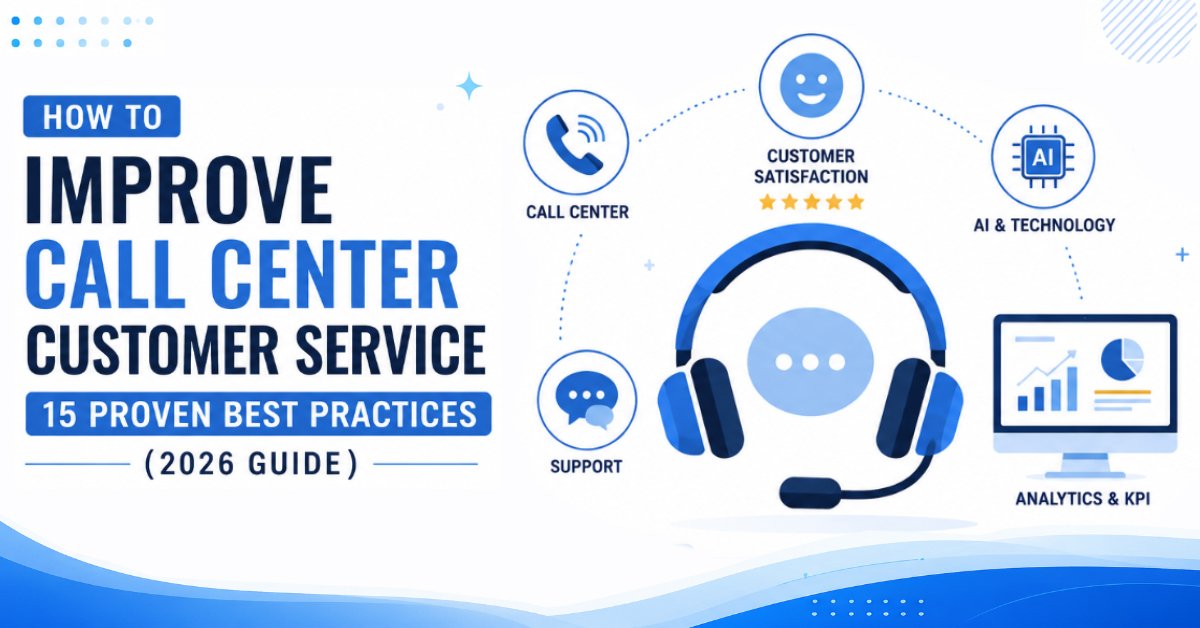
Improving call center customer service requires a combination of well-trained agents, efficient processes, modern technology, and continuous performance monitoring. The most effective strategies include hiring the right people, providing regular coaching, using AI-powered tools, personalizing customer interactions, tracking key performance metrics, and collecting customer feedback to drive ongoing improvements.
Businesses that consistently invest in agent development, quality assurance, and customer experience are more likely to achieve higher Customer Satisfaction (CSAT), better First Call Resolution (FCR), improved Net Promoter Score (NPS), and stronger customer loyalty.
Key Takeaways
- Excellent customer service goes beyond answering calls quickly—it focuses on solving customer problems effectively and creating positive experiences.
- Well-trained and motivated agents are the foundation of every successful call center.
- AI-powered tools can improve efficiency by assisting agents with real-time suggestions, automated call summaries, sentiment analysis, and intelligent routing.
- Tracking key performance indicators such as CSAT, FCR, AHT, NPS, and Service Level helps identify improvement opportunities.
- Regular coaching, quality assurance, and customer feedback create a culture of continuous improvement.
- Personalizing conversations and showing genuine empathy significantly improve customer satisfaction.
- A structured improvement strategy benefits businesses of all sizes, from startups and small businesses to large enterprises and BPO providers.
Introduction
Providing excellent customer service is one of the most important factors behind a successful call center. Every customer interaction shapes how people perceive your business, and even a single poor experience can lead to lost trust and missed opportunities.
Today, customers expect fast responses, accurate solutions, and personalized support across every communication channel. Meeting these expectations requires more than just answering calls—it involves skilled agents, efficient processes, continuous training, and the smart use of modern technologies like AI.
Whether you manage an in-house support team, a BPO call center, or a contact center, you’ll discover 15 proven best practices that can help increase customer satisfaction, improve agent performance, and build long-term customer loyalty.
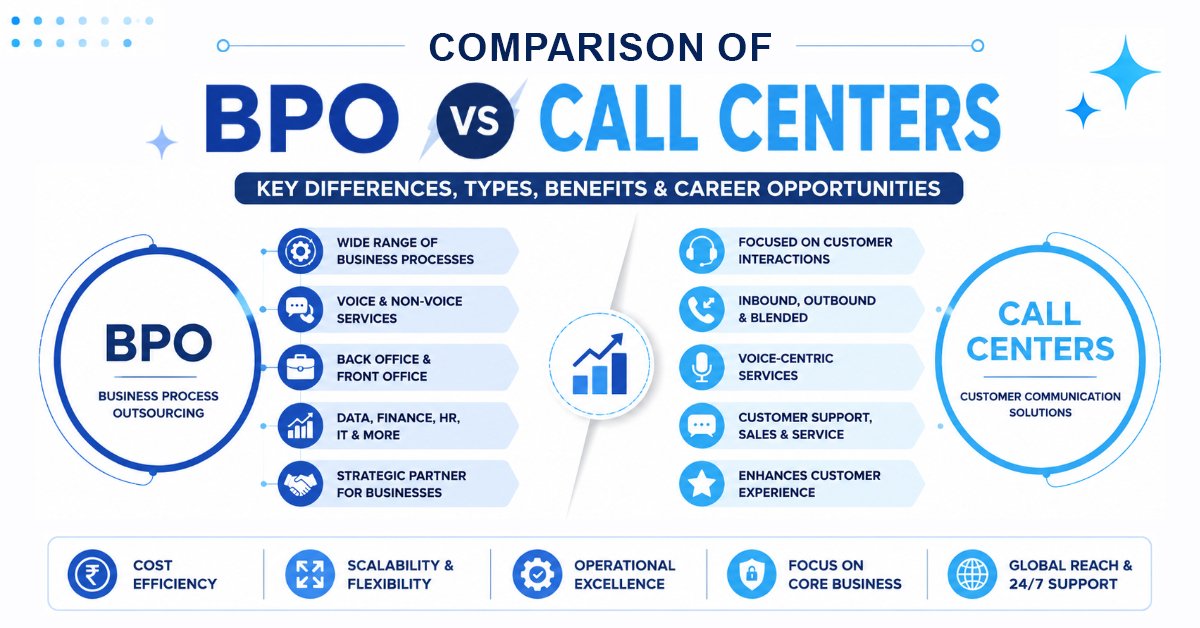
If you’re deciding between outsourcing and operating an internal support team, understanding the difference between a BPO and a call center can help you choose the right model.
Whether you manage a small support team or a large contact center, there are practical ways to improve call center customer service, strengthen agent performance, and create better customer experiences.
Let’s get started.
Why Call Center Customer Service Matters
Excellent customer service is more than just resolving customer issues—it’s about creating positive experiences that build trust and encourage long-term loyalty. In today’s competitive market, customers have countless alternatives, so the quality of your support can be a key factor in whether they stay with your business or switch to a competitor.
A well-managed call center can deliver several important business benefits, including:
- Higher customer satisfaction: Customers appreciate fast, accurate, and friendly support.
- Increased customer loyalty: Positive experiences encourage repeat business and long-term relationships.
- Better brand reputation: Happy customers are more likely to recommend your business to others.
- Higher first-call resolution (FCR): Solving problems during the first interaction saves time for both customers and agents.
- Improved operational efficiency: Skilled agents and streamlined processes help reduce costs while maintaining service quality.
- Greater revenue opportunities: Satisfied customers are more likely to purchase additional products or services and remain loyal over time.
Businesses that consistently invest in their people, processes, and technology are better positioned to improve call center customer service, increase customer loyalty, and achieve sustainable growth.
Simply put, every customer conversation is an opportunity to strengthen your brand. Businesses that consistently deliver excellent support often enjoy higher retention rates, stronger customer relationships, and sustainable business growth.
Common Challenges That Hurt Customer Service
Even experienced call centers face obstacles that can negatively impact customer experience. Recognizing these challenges is the first step toward improving service quality.
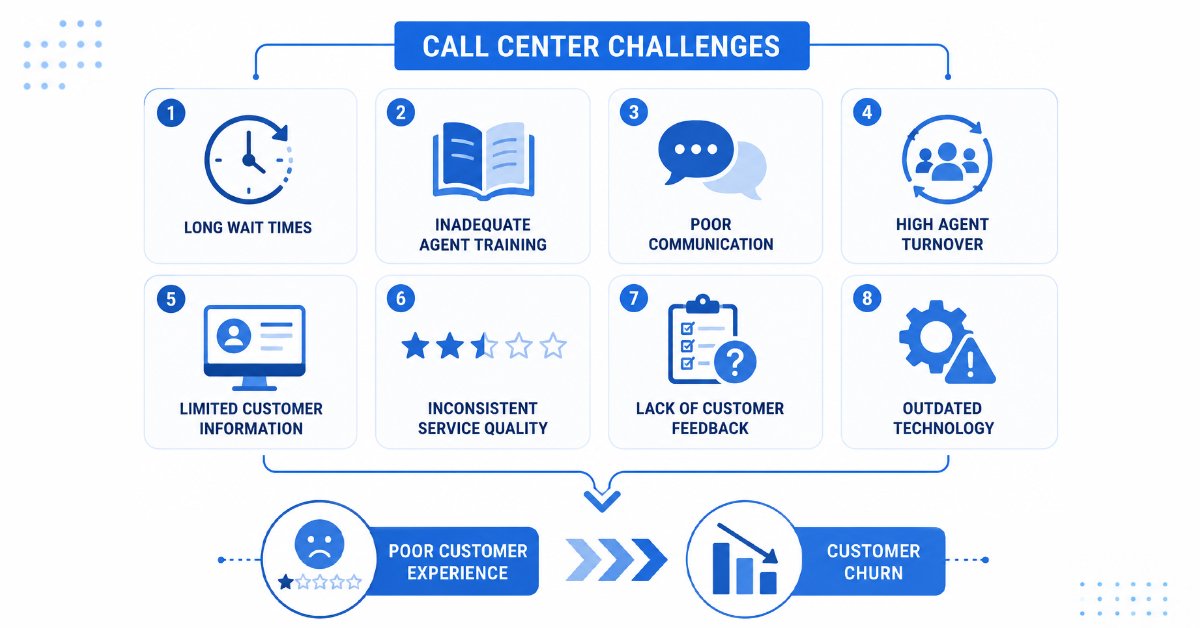
1. Long Wait Times
Customers expect quick assistance. When they spend too much time waiting to speak with an agent, frustration increases, and satisfaction declines.
2. Inadequate Agent Training
Agents who lack product knowledge, communication skills, or problem-solving abilities may struggle to resolve customer issues effectively.
3. Poor Communication
Using complex language, interrupting customers, or failing to listen carefully can lead to misunderstandings and unresolved problems.
4. High Agent Turnover
Frequent employee turnover creates staffing shortages, increases training costs, and affects service consistency.
5. Limited Access to Customer Information
When agents cannot quickly access customer history or previous interactions, customers are often forced to repeat the same information, leading to a poor experience.
6. Inconsistent Service Quality
Without regular quality assurance and coaching, customer experiences can vary significantly from one agent to another.
7. Lack of Customer Feedback
Ignoring customer feedback makes it difficult to identify recurring issues and improve service processes.
8. Outdated Technology
Legacy systems, slow software, and disconnected communication channels can reduce agent productivity and delay issue resolution.
Identifying these problems is the first step toward finding practical ways to improve call center customer service and deliver more consistent customer experiences.
How to Overcome These Challenges
The good news is that most customer service problems can be addressed with the right strategy. Investing in agent training, using modern technology, monitoring performance, and actively listening to customer feedback can significantly improve both service quality and operational efficiency.
The following best practices will help you build a customer-focused call center that delivers faster resolutions, happier customers, and measurable business results.
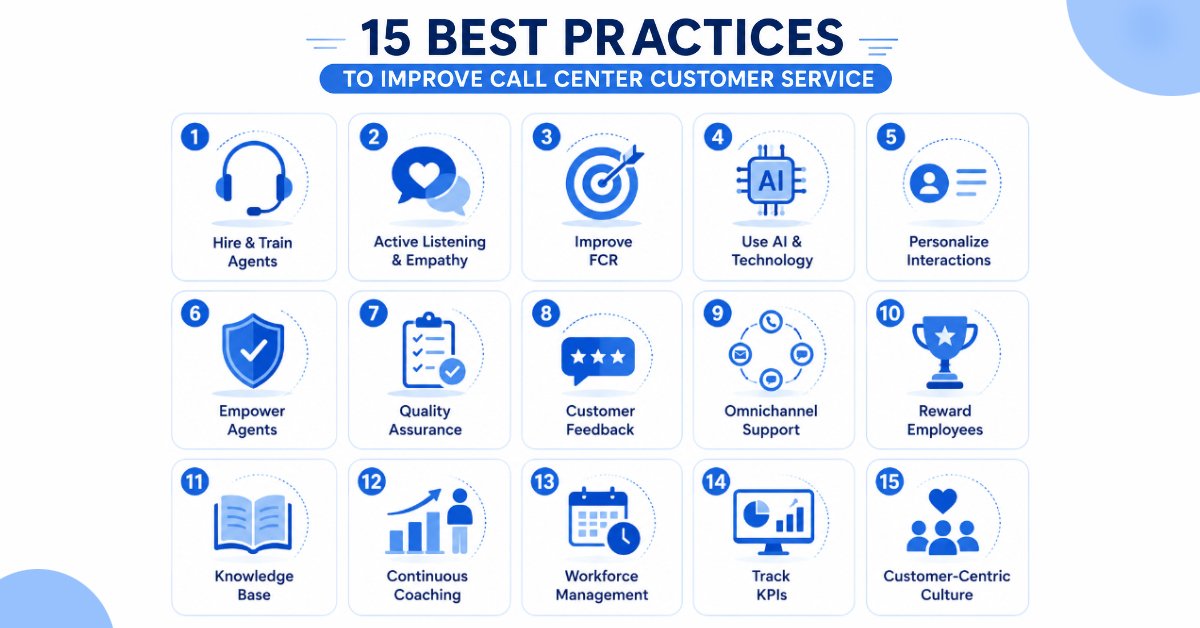
15 Proven Best Practices to Improve Call Center Customer Service
The following strategies provide a practical framework to improve call center customer service, strengthen agent performance, and build stronger relationships with customers. While every business has different needs, these strategies can be adapted to organizations of all sizes—from startups and small businesses to large enterprises and BPOs.
1. Hire and Train the Right Customer Service Agents
Your agents are the face of your business. No matter how advanced your technology is, customer service quality ultimately depends on the people interacting with customers every day.
When hiring new agents, look beyond technical skills. Prioritize candidates who demonstrate:
- Excellent communication skills
- Active listening abilities
- Patience and empathy
- Problem-solving skills
- A positive attitude
- Willingness to learn
Once hired, training should never stop. Regular coaching helps agents stay updated on products, company policies, and customer service techniques.
Best Practices for Agent Training
- Conduct structured onboarding programs.
- Provide ongoing product and policy updates.
- Use role-playing exercises for real-life scenarios.
- Review recorded calls during coaching sessions.
- Offer constructive feedback regularly.
Example
A customer contacts support because they received the wrong product.
Instead of simply apologizing, a well-trained agent verifies the order, explains the return process clearly, arranges a replacement, and confirms the expected delivery date—all in one interaction. This creates a positive experience and increases the chances of customer retention.
Pro Tip: Invest in continuous learning rather than one-time training. Even experienced agents benefit from regular coaching and performance reviews.
2. Practice Active Listening and Show Genuine Empathy
Customers don’t just want quick answers—they want to feel heard and understood.
Active listening means giving customers your full attention, avoiding interruptions, asking relevant questions, and confirming that you understand their concerns before offering a solution.
Empathy helps agents build trust, especially when customers are frustrated or upset.
Ways to Demonstrate Empathy
- Let customers explain the issue without interrupting.
- Acknowledge their feelings.
- Use positive and reassuring language.
- Take ownership of the issue.
- Thank customers for their patience.
Example
Less Effective Response
“I’ll check your account.”
Better Response
“I understand how frustrating this situation must be. Let me review your account so we can resolve this as quickly as possible.”
The second response makes the customer feel respected and reassured while maintaining professionalism.
Pro Tip: Empathy doesn’t always require solving the issue immediately. Sometimes, simply making customers feel understood significantly improves their overall experience.
3. Reduce Wait Times and Improve First Call Resolution (FCR)
Customers appreciate businesses that respect their time. Long hold times and repeated transfers often lead to frustration and lower customer satisfaction.
A key goal should be resolving customer issues during the first interaction, commonly known as First Call Resolution (FCR).
How to Improve FCR
- Give agents access to complete customer information.
- Maintain an up-to-date knowledge base.
- Empower agents to make appropriate decisions without unnecessary approvals.
- Use intelligent call routing to connect customers with the right department.
- Minimize unnecessary call transfers.
Why It Matters
Higher FCR leads to:
- Greater customer satisfaction
- Reduced repeat calls
- Lower operating costs
- Increased agent productivity
| Poor Practice | Better Practice |
| Transferring customers multiple times | Connect customers to the right agent from the beginning |
| Asking customers to repeat information | Display previous interactions in the CRM |
| Escalating every issue | Empower trained agents to resolve common problems independently |
Improving First Call Resolution can significantly improve call center customer service by reducing repeat contacts and helping customers get their issues resolved more efficiently.
Pro Tip: Track repeat calls for the same issue. A high repeat-call rate often indicates opportunities to improve your processes or training.
4. Use AI and Modern Call Center Technology Wisely
Technology should make customer service easier—not more complicated.
Modern call centers use AI-powered tools to support agents, automate repetitive tasks, and improve the overall customer experience. The goal isn’t to replace human agents but to help them work more efficiently.
Some of the most valuable technologies include:
- AI-powered call routing
- Intelligent virtual assistants
- AI-generated call summaries
- Real-time agent assistance
- Sentiment analysis
- CRM integration
- Omnichannel communication platforms
- Workforce management software
Benefits of AI in Customer Service
| AI Feature | Business Benefit |
| Intelligent Call Routing | Connects customers to the most suitable agent |
| AI Call Summaries | Saves agents time on post-call documentation |
| Sentiment Analysis | Detects customer frustration in real time |
| Agent Assist | Suggests answers during live conversations |
| Chatbots | Handles routine questions 24/7 |
For example, if a customer calls about a delayed shipment, AI can instantly retrieve order details and present relevant information to the agent before the conversation begins. This reduces handling time and allows the agent to focus on solving the customer’s problem.
When implemented thoughtfully, these technologies can help businesses improve call center customer service while allowing agents to focus more on complex customer needs.
Pro Tip: Use AI to assist your agents—not replace the human touch. Customers still value empathy, clear communication, and personalized support.
5. Personalize Every Customer Interaction
Customers expect businesses to recognize them as individuals, not just ticket numbers.
Personalization means using customer information responsibly to provide relevant and efficient support. Knowing a customer’s purchase history, previous interactions, or preferred communication channel helps agents deliver a smoother experience.
Simple Ways to Personalize Support
- Address customers by their name.
- Review previous conversations before responding.
- Avoid asking customers to repeat information.
- Recommend relevant solutions based on their history.
- Follow up after resolving complex issues.
Example
Imagine a customer who recently contacted support about a software installation problem. If they call again, the agent can review the previous case before answering and say:
“Welcome back, Mr. Sharma. I see you contacted us recently regarding your software installation. Let’s continue from where we left off and get this resolved for you.”
This personalized approach saves time and reassures the customer that the company values their experience.
Why Personalization Matters
Personalized service helps businesses:
- Build stronger customer relationships.
- Improve customer satisfaction.
- Increase trust and loyalty.
- Reduce customer effort.
- Encourage repeat business.
Pro Tip: Personalization should always respect customer privacy. Use customer data responsibly and only to improve the support experience.
6. Empower Agents to Make Decisions
One of the biggest frustrations for customers is being placed on hold while an agent seeks approval from a supervisor for a simple request. Empowering agents to make certain decisions on their own helps resolve issues faster and creates a smoother customer experience.
Of course, empowerment doesn’t mean giving agents unlimited authority. Instead, establish clear guidelines that define what they can approve, such as refunds within a specific limit, replacement requests, or goodwill gestures.
How to Empower Your Agents
- Define clear decision-making guidelines.
- Give agents access to the right tools and customer information.
- Provide regular coaching to build confidence.
- Encourage ownership of customer issues.
- Trust agents to make reasonable decisions.
Example
A customer receives a damaged product. Instead of transferring the call to a supervisor, the agent verifies the order and immediately arranges a replacement according to company policy.
The issue is resolved in one call, saving time for both the customer and the business.
Pro Tip: Empowered agents feel more confident, make faster decisions, and deliver a better customer experience.
7. Monitor Calls and Conduct Regular Quality Assurance (QA)
Improvement starts with measurement. Without monitoring customer interactions, it’s difficult to know what’s working and where improvements are needed.
A structured Quality Assurance (QA) program helps managers evaluate call quality, identify coaching opportunities, and maintain consistent service standards.
Rather than using QA only to find mistakes, use it as a coaching tool that helps agents improve over time.
Regular call monitoring and coaching give managers actionable insights they can use to improve call center customer service over time.
What to Evaluate During Call Reviews
- Professional greeting
- Identity verification (when required)
- Active listening
- Product knowledge
- Communication clarity
- Empathy and professionalism
- Problem-solving skills
- Compliance with company policies
- Proper call closing
Sample QA Checklist
| Evaluation Criteria | Completed |
| Greeted the customer professionally | ✔ |
| Listened without interrupting | ✔ |
| Understood the customer’s issue | ✔ |
| Offered the correct solution | ✔ |
| Used empathetic language | ✔ |
| Closed the call professionally | ✔ |
Example
A QA review shows that several agents frequently interrupt customers before they finish explaining their issues. After targeted coaching sessions, customer satisfaction scores improve because customers feel heard and respected.
Pro Tip: Review both excellent and average calls during coaching sessions. Highlighting good practices motivates agents and reinforces successful behaviors.
8. Collect Customer Feedback and Act on It
Your customers are one of the best sources of information for improving service.
Collecting feedback helps you understand what customers appreciate and where your support team can improve. More importantly, acting on that feedback demonstrates that your business values customer opinions.
Ways to Collect Feedback
- Post-call surveys
- Email surveys
- SMS feedback requests
- Net Promoter Score (NPS) surveys
- Customer interviews
- Online reviews and ratings
Questions You Can Ask
- Was your issue resolved today?
- How satisfied were you with our service?
- Was our agent courteous and professional?
- How easy was it to get the help you needed?
- What could we improve?
Turn Feedback Into Action
Simply collecting feedback isn’t enough. Review customer comments regularly to identify recurring issues, then create action plans to address them.
For example, if many customers mention long wait times, consider adjusting staffing schedules or introducing callback options during peak hours.
Pro Tip: Share positive customer feedback with your team. Recognition boosts morale and encourages agents to maintain high service standards.
9. Deliver a Consistent Omnichannel Customer Experience
Today’s customers don’t interact with businesses through just one channel. They may start with live chat, continue through email, and finally call your support team.
Depending on the type of customer interaction, businesses may also rely on inbound and outbound call centers to manage different communication needs.
An omnichannel approach ensures customers receive a consistent experience regardless of how they contact your business.
Benefits of Omnichannel Support
- Faster issue resolution
- Better customer convenience
- Reduced customer effort
- Consistent communication
- Improved customer satisfaction
Best Practices
- Integrate all communication channels into one platform.
- Keep customer history accessible across channels.
- Maintain a consistent tone and service quality.
- Ensure smooth handoffs between teams.
- Update customer records after every interaction.
Example
A customer begins a conversation through live chat but later calls customer support. Instead of asking the customer to explain the issue again, the agent can view the previous chat history and continue assisting without interruption.
This seamless experience saves time and increases customer satisfaction.
| Communication Channel | Customer Expectation |
| Phone | Immediate assistance |
| Detailed responses | |
| Live Chat | Quick problem-solving |
| Social Media | Fast public responses |
| Messaging Apps | Convenient ongoing support |
Pro Tip: Customers care more about solving their problem than the channel they use. Focus on providing a consistent experience everywhere.
10. Recognize and Reward High-Performing Agents
Happy employees often create happy customers.
Recognizing agents for their hard work improves motivation, reduces turnover, and encourages consistently high performance. Recognition doesn’t always have to involve financial rewards—simple appreciation can have a significant impact.
Ways to Recognize Top Performers
- Employee of the Month programs
- Performance certificates
- Public appreciation during team meetings
- Career development opportunities
- Additional paid leave or flexible schedules
- Performance-based bonuses
Measure Performance Fairly
Evaluate agents using multiple metrics rather than focusing on a single KPI.
Consider factors such as:
- Customer Satisfaction (CSAT)
- First Call Resolution (FCR)
- Quality Assurance (QA) Score
- Attendance
- Customer Feedback
- Teamwork
- Professionalism
Example
Instead of rewarding only the agent with the shortest average handling time, recognize an agent who consistently receives outstanding customer feedback while maintaining high-quality service. This encourages agents to prioritize customer satisfaction rather than simply ending calls quickly.
Pro Tip: Celebrate both individual achievements and team successes. A positive workplace culture encourages collaboration and continuous improvement.
11. Build and Maintain a Comprehensive Knowledge Base
A well-organized knowledge base is one of the most valuable resources for any call center. It gives agents quick access to accurate information, helping them resolve customer issues faster and more consistently.
Instead of searching through multiple documents or asking supervisors for help, agents can find answers in one centralized location.
What Should a Knowledge Base Include?
- Product and service information
- Frequently Asked Questions (FAQs)
- Troubleshooting guides
- Company policies
- Refund and return procedures
- Call scripts and response templates
- Escalation guidelines
Benefits of a Knowledge Base
- Faster issue resolution
- Reduced Average Handle Time (AHT)
- More consistent customer responses
- Shorter training time for new agents
- Improved First Call Resolution (FCR)
Example
A customer calls asking about your company’s warranty policy. Instead of placing the customer on hold to confirm the details, the agent quickly accesses the knowledge base and provides an accurate answer within seconds.
Pro Tip: Review and update your knowledge base regularly. Outdated information can lead to incorrect responses and a poor customer experience.
12. Provide Continuous Coaching and Skill Development
Training should not end after onboarding. Customer expectations, products, and technologies continue to evolve, so agents need ongoing coaching to stay confident and effective.
Regular coaching sessions help agents improve communication, strengthen problem-solving skills, and learn from real customer interactions.
Effective Coaching Methods
- One-on-one coaching sessions
- Call recording reviews
- Role-playing exercises
- Team workshops
- Product knowledge updates
- Soft skills training
Skills Every Customer Service Agent Should Develop
| Technical Skills | Soft Skills |
| CRM software | Active listening |
| Product knowledge | Empathy |
| Call handling | Patience |
| Troubleshooting | Communication |
| Process compliance | Problem-solving |
Example
During a coaching session, a supervisor reviews a recorded call and notices that the agent rushed the customer through the conversation. Together, they discuss techniques for asking open-ended questions and allowing customers enough time to explain their concerns.
As a result, the agent becomes more confident, and future customer satisfaction scores improve.
Pro Tip: Coaching should focus on growth rather than criticism. Constructive feedback encourages agents to learn and improve continuously.
13. Optimize Workforce Management and Scheduling
Even the best-trained agents cannot provide excellent service if there aren’t enough people available to handle customer demand.
Effective workforce management ensures the right number of agents are available at the right time, reducing wait times while avoiding unnecessary staffing costs.
Best Practices for Workforce Management
- Forecast call volumes using historical data.
- Schedule agents based on peak hours.
- Monitor staffing levels in real time.
- Plan for seasonal demand and special events.
- Balance workloads to reduce agent burnout.
Benefits
- Shorter customer wait times
- Improved service levels
- Higher employee productivity
- Reduced overtime costs
- Better customer satisfaction
Example
An online retailer notices that customer calls increase significantly during festive sales. By forecasting demand and scheduling additional agents in advance, the company reduces average wait times and maintains high service quality throughout the busy period.
Pro Tip: Review workforce plans regularly. Customer demand can change due to marketing campaigns, product launches, or seasonal trends.
14. Measure and Improve Key Customer Service KPIs
You can’t improve what you don’t measure. Tracking the right Key Performance Indicators (KPIs) helps managers understand how well the call center is performing and where improvements are needed.
Rather than focusing on a single metric, monitor multiple KPIs to get a complete picture of customer service performance.
Important Call Center KPIs
| KPI | What It Measures | Why It Matters |
| Customer Satisfaction (CSAT) | Customer happiness after interactions | Indicates overall service quality |
| First Call Resolution (FCR) | Issues resolved during the first contact | Reduces repeat calls and improves customer satisfaction |
| Average Handle Time (AHT) | Average time spent resolving a customer issue | Measures efficiency without sacrificing quality |
| Net Promoter Score (NPS) | Measures how likely customers are to remain loyal and recommend your business to others. | Reflects long-term customer relationships |
| Service Level | Percentage of incoming calls handled within the specified response time | Measures operational efficiency |
| Average Speed of Answer (ASA) | How quickly calls are answered | Helps identify staffing issues |
| Quality Assurance (QA) Score | Overall quality of agent interactions | Supports coaching and continuous improvement |
How to Use KPIs Effectively
- Set realistic performance targets.
- Review reports regularly.
- Identify trends rather than isolated incidents.
- Combine quantitative data with customer feedback.
- Use results to improve training and processes.
Example
If your call center has a high Average Handle Time but also a high Customer Satisfaction score, reducing call length should not become the primary objective. Instead, focus on maintaining quality while identifying opportunities to streamline processes.
Pro Tip: Avoid judging agents based on one KPI alone. Balanced performance evaluation leads to better decision-making and a healthier workplace.
15. Build a Customer-Centric Culture
Technology, training, and processes all contribute to excellent customer service—but lasting success begins with company culture.
A customer-centric culture means every employee, from frontline agents to senior management, understands that customer satisfaction is a top priority.
When employees consistently focus on solving customer problems and creating positive experiences, service quality naturally improves.
How to Build a Customer-Centric Culture
- Make customer satisfaction a company-wide goal.
- Encourage employees to take ownership of customer issues.
- Share customer feedback with the entire team.
- Celebrate service excellence.
- Promote collaboration across departments.
- Continuously invest in employee development.
Signs of a Customer-Centric Call Center
- Customers receive consistent service.
- Agents feel empowered to solve problems.
- Teams collaborate instead of working in silos.
- Decisions are made with the customer in mind.
- Continuous improvement becomes part of everyday operations.
Example
A telecommunications company reviews customer complaints every month. Instead of blaming individual agents, managers identify recurring issues, update internal processes, and provide additional training. Over time, customer complaints decrease, employee confidence improves, and overall customer satisfaction increases.
Pro Tip: Great customer service isn’t created by one department—it’s built by an entire organization working toward the same goal.
Final Thoughts on the 15 Best Practices
Improving call center customer service doesn’t happen overnight. It requires continuous learning, regular performance monitoring, modern technology, and a genuine commitment to putting customers first.
Start by implementing a few of these best practices, measure the results, and refine your approach over time. Even small improvements—such as better agent coaching, faster response times, or more personalized conversations—can have a significant impact on customer satisfaction and business growth.
By combining skilled employees, efficient processes, and customer-focused technology, your call center can deliver exceptional experiences that build trust, increase loyalty, and set your business apart from the competition.
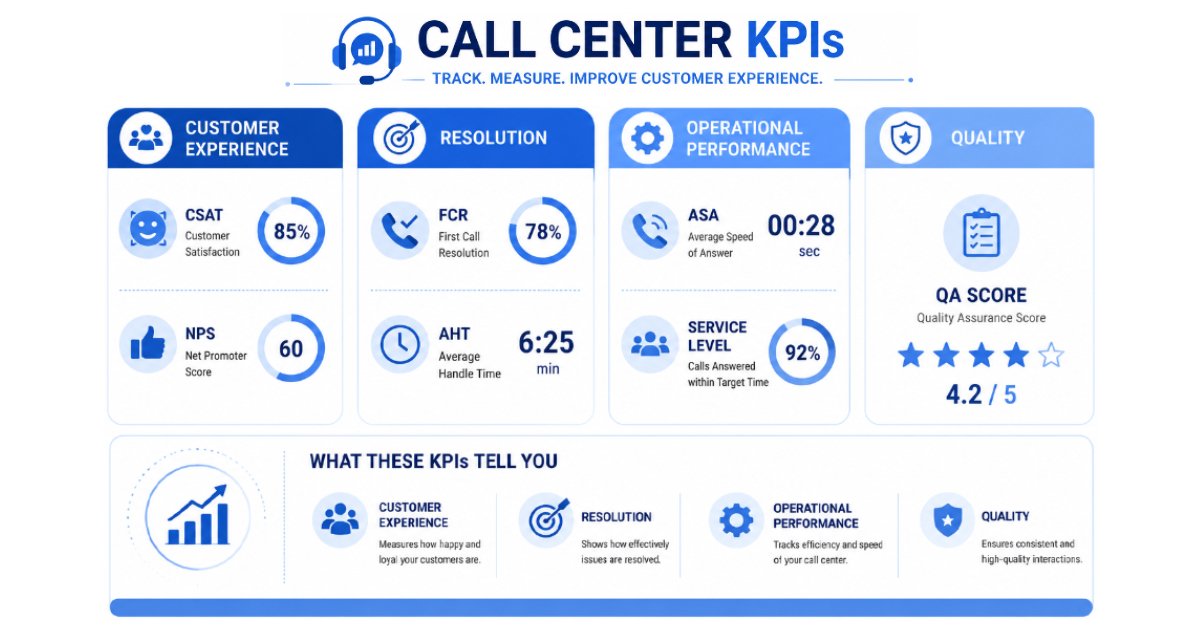
Call Center Customer Service KPI Checklist
Tracking the right Key Performance Indicators (KPIs) helps you measure whether your customer service improvement efforts are delivering results. Instead of focusing on just one metric, monitor a balanced set of KPIs to gain a complete view of your call center’s (KPIs) performance.
| KPI | What It Measures | Why It Matters |
| Customer Satisfaction (CSAT) | Customer satisfaction after an interaction | Indicates overall service quality |
| First Call Resolution (FCR) | Issues resolved on the first contact | Improves customer experience and reduces repeat calls |
| Average Handle Time (AHT) | Average time spent resolving customer issues | Measures efficiency while maintaining service quality |
| Average Speed of Answer (ASA) | How quickly calls are answered | Helps reduce customer wait times |
| Service Level | Percentage of incoming calls handled within the specified response time | Evaluates operational performance |
| Net Promoter Score (NPS) | Measures how likely customers are to remain loyal and recommend your business to others. | Measures long-term customer relationships |
| Quality Assurance (QA) Score | Overall quality of agent interactions | Identifies coaching and training opportunities |
Tip: Review these KPIs weekly or monthly to identify trends and make data-driven decisions.
Common Mistakes to Avoid
Even well-established call centers can make mistakes that negatively impact the customer experience. Avoiding these common pitfalls can significantly improve service quality.
1. Prioritizing Speed Over Quality
Reducing call duration is important, but rushing customers often leads to unresolved issues and repeat calls.
2. Neglecting Agent Training
Customer expectations and business processes evolve over time. Ongoing training is essential for maintaining service quality.
3. Ignoring Customer Feedback
Failing to analyze surveys, complaints, and reviews means missing valuable opportunities to improve.
4. Overusing Scripts
Scripts provide consistency, but agents should adapt conversations naturally instead of sounding robotic.
5. Focusing on a Single KPI
Measuring only Average Handle Time (AHT) or call volume provides an incomplete picture. Use multiple KPIs for balanced performance evaluation.
6. Delaying Issue Resolution
Customers appreciate businesses that take ownership of problems and provide timely updates.
7. Underestimating Employee Well-Being
Overworked and stressed agents are less likely to deliver exceptional customer service. Invest in employee engagement and work-life balance.
30-Day Action Plan to Improve Call Center Customer Service
If you’re unsure where to begin, follow this simple 30-day improvement plan.
| Timeline | Action Items |
| Week 1 | Review current customer service performance, analyze KPIs, identify major pain points, and gather customer feedback. |
| Week 2 | Conduct agent coaching sessions, update training materials, and review call recordings for improvement opportunities. |
| Week 3 | Optimize call routing, update the knowledge base, improve workflows, and implement quick process improvements. |
| Week 4 | Measure results, compare KPIs with previous performance, recognize top-performing agents, and create a long-term improvement plan. |
Following a structured approach makes continuous improvement more manageable and helps your team achieve measurable results over time.
Call Center Customer Service Improvement Checklist
Improving call center customer service is an ongoing process. Use this checklist to quickly assess whether your team is covering the most important areas of customer experience, agent performance, technology, and quality management.
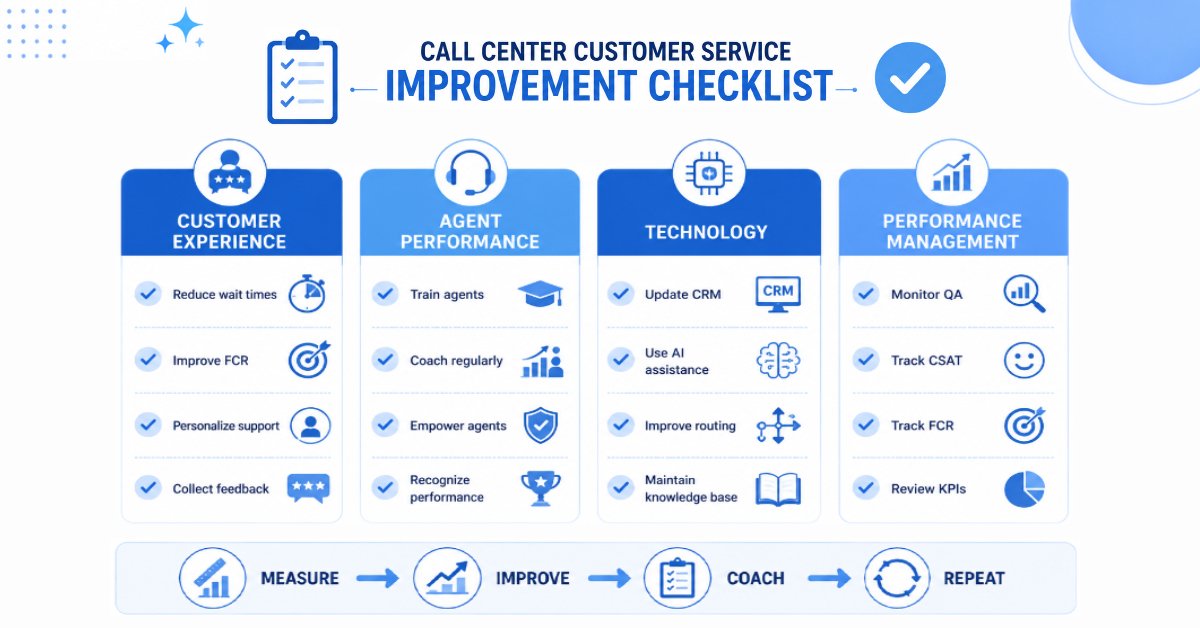
Customer Experience
- ☐ Make it easy for customers to reach the right agent.
- ☐ Reduce unnecessary wait times and transfers.
- ☐ Aim to resolve issues during the first interaction.
- ☐ Personalize conversations using relevant customer information.
- ☐ Encourage agents to listen actively and show empathy.
- ☐ Collect customer feedback after important interactions.
Agent Performance
- ☐ Provide comprehensive onboarding for new agents.
- ☐ Offer regular coaching and skill-development sessions.
- ☐ Give agents access to an up-to-date knowledge base.
- ☐ Empower agents to resolve appropriate issues without unnecessary escalation.
- ☐ Recognize and reward consistently strong performance.
- ☐ Monitor employee workload and signs of burnout.
Technology and Processes
- ☐ Keep CRM and customer information easily accessible.
- ☐ Integrate customer communication channels where possible.
- ☐ Use AI to assist agents with tasks such as call summaries, knowledge retrieval, and sentiment analysis.
- ☐ Review and improve call-routing processes.
- ☐ Keep customer service policies and procedures up to date.
Quality and Performance Management
- ☐ Conduct regular Quality Assurance (QA) reviews.
- ☐ Track CSAT, FCR, AHT, NPS, ASA, and other relevant KPIs.
- ☐ Identify recurring customer complaints and their root causes.
- ☐ Use QA results to guide coaching rather than simply penalizing agents.
- ☐ Review performance trends regularly and adjust processes when necessary.
Quick Self-Assessment
If you can check most of the items above, your call center has a solid foundation for delivering excellent customer service. If several boxes remain unchecked, use them to identify your highest-priority improvement areas.
The goal isn’t to fix everything at once. Start with the issues that have the greatest impact on customer satisfaction, measure the results, and gradually improve the remaining areas.
Frequently Asked Questions (FAQs)
1. What is the best way to improve call center customer service?
The most effective approach is to combine well-trained agents, continuous coaching, modern technology, quality assurance, and customer feedback. Focusing on both employee development and customer experience leads to long-term success.
2. Which KPI is the most important for measuring customer service?
There isn’t a single most important KPI. Businesses should monitor Customer Satisfaction (CSAT), First Call Resolution (FCR), Average Handle Time (AHT), Net Promoter Score (NPS), Service Level, and Quality Assurance (QA) Score together for a complete performance picture.
3. How does AI improve call center customer service?
AI can automate routine tasks, intelligently route calls, generate call summaries, analyze customer sentiment, assist agents with real-time recommendations, and improve workforce planning. These capabilities help agents work more efficiently while enhancing the customer experience.
4. Why is empathy important in customer service?
Empathy helps customers feel heard, respected, and understood. Even when a problem cannot be resolved immediately, empathetic communication builds trust and improves customer satisfaction.
5. How often should call center agents receive training?
New agents should complete comprehensive onboarding, while experienced agents should receive regular coaching, product updates, and skill development sessions throughout the year.
6. What are the biggest challenges faced by call centers?
Some of the most common challenges include long wait times, high employee turnover, inconsistent service quality, inadequate training, outdated technology, and limited access to customer information.
7. How can small businesses improve customer service with a limited budget?
Small businesses can improve customer service by investing in employee training, creating a knowledge base, collecting customer feedback, using affordable cloud-based CRM solutions, and focusing on personalized customer interactions before investing in advanced technologies.
Conclusion
Delivering exceptional customer service isn’t about implementing a single strategy—it’s about continuously improving every customer interaction.
From hiring the right agents and providing ongoing coaching to using AI-powered tools and tracking meaningful KPIs, each best practice contributes to a stronger, more customer-focused call center. Businesses that consistently invest in their people, processes, and technology are better equipped to resolve issues quickly, build lasting customer relationships, and stay ahead of the competition.
Whether you manage a small support team or a large contact center, start by implementing a few of the strategies discussed in this guide. Measure your results, gather feedback, and continue refining your approach. Over time, these improvements can lead to higher customer satisfaction, increased loyalty, and sustainable business growth.
Remember, every call is an opportunity to create a positive impression. Make each interaction count.