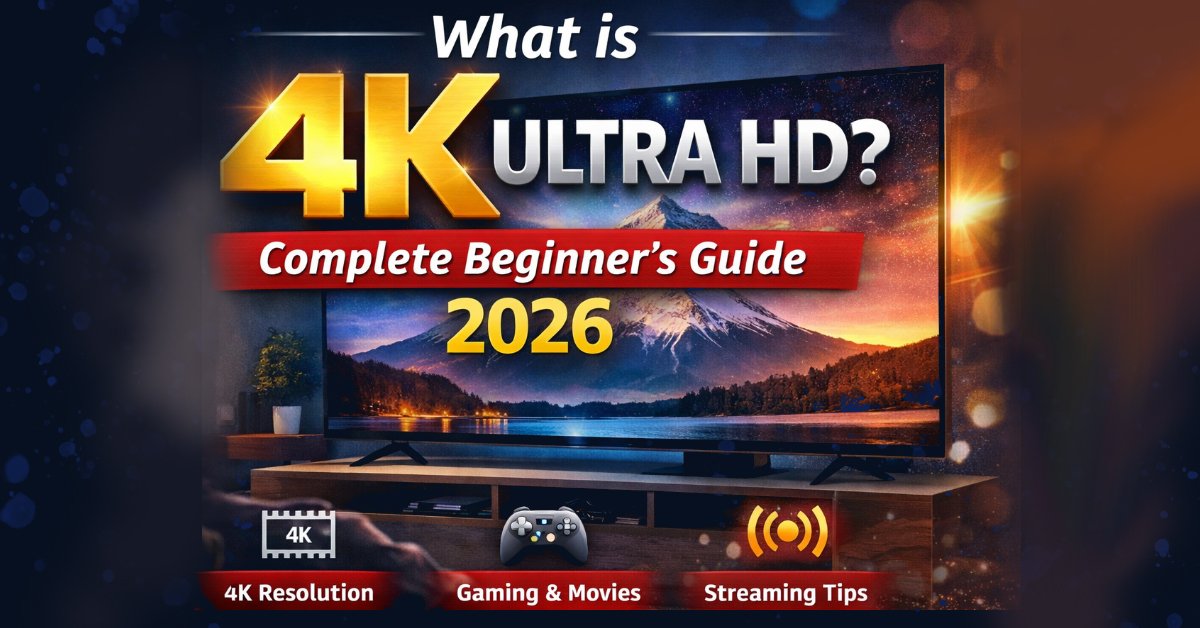
Ever stood in an electronics store, staring at a wall full of TVs, wondering…
what is 4K Ultra HD and why does every screen look so sharp?
You’re not alone.
In 2026, almost every TV, smartphone, and streaming platform screams “4K,” but most people still don’t fully understand what it means—or whether it’s even worth spending extra money on.
So let’s break it down in the simplest way possible. No confusing tech jargon. No fluff. Just clear answers that help you make a smart buying decision.
Quick Answer
What is 4K Ultra HD?
4K Ultra HD (Ultra High Definition) is a screen resolution of 3840 × 2160 pixels, which is 4 times sharper than Full HD (1080p). It delivers clearer, more detailed images, especially on larger screens, making it ideal for movies, gaming, and streaming. Understanding What is 4K Ultra HD can help you appreciate the advancements in display technology and enhance your viewing experience.
What is 4K Ultra HD? Simple Explanation for Beginners
Let’s make this super easy to understand.
Imagine your TV screen is made up of tiny dots called pixels. The more pixels you have, the sharper and clearer the picture looks.
- A basic HD TV has fewer pixels
- A Full HD TV has more
- A 4K Ultra HD TV has a LOT more
In fact, 4K packs over 8 million pixels into your screen.
That’s why when you watch a 4K video, you notice:
- Sharper edges
- More detail in faces and objects
- Better color depth
- A more “real-life” feel
So, what is 4K Ultra HD? It’s the future of viewing experiences, offering unmatched clarity and detail.
Think of it like this:
Full HD is like a good photo
4K is like zooming into that photo—and still seeing everything clearly
The term 4K Ultra HD is defined by organizations like the Consumer Technology Association as a resolution of 3840 × 2160 pixels.
Pixel Breakdown (With Comparison Table)
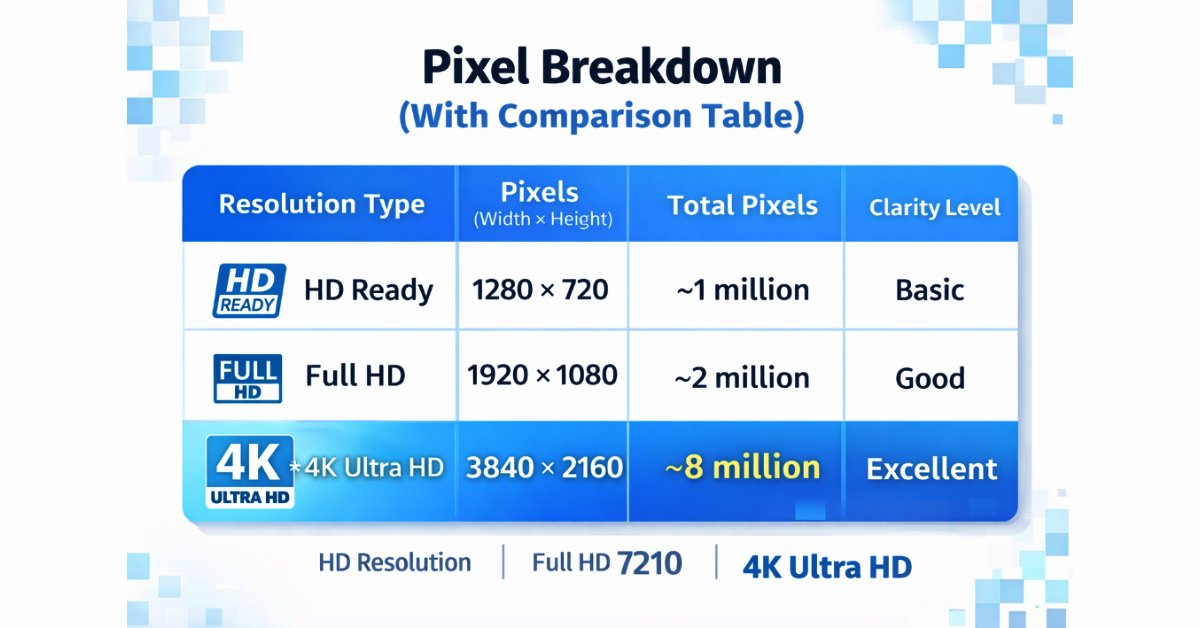
| Resolution Type | Pixels (Width × Height) | Total Pixels | Clarity Level |
| HD Ready | 1280 × 720 | ~1 million | Basic |
| Full HD | 1920 × 1080 | ~2 million | Good |
| 4K Ultra HD | 3840 × 2160 | ~8 million | Excellent |
That’s why 4K resolution meaning = 4× the detail of Full HD
4K vs Full HD vs HD Ready
Let’s compare them in real-world terms:
HD Ready (720p)
- Entry-level quality
- Suitable for small screens
- Looks outdated in 2026
Full HD (1080p)
- Still decent for budget users
- Good for smaller TVs (32–40 inches)
- Limited detail compared to 4K
4K Ultra HD (2160p)
- Crystal-clear picture
- Best for 43 inches and above
- Future-proof for streaming and gaming
If you want a more detailed breakdown, check out our complete guide on HD Ready vs Full HD vs 4K: Which Resolution Should You Choose in 2026?
Benefits of 4K TVs
1. Incredible Detail
You can see:
- Tiny textures in clothes
- Individual strands of hair
- Background elements you’d normally miss
2. Better Colors (Especially with HDR)
- Brighter whites
- Deeper blacks
- More vibrant colors
3. Bigger Screens Without Pixelation
4. Perfect for Gaming
5. Future-Proof Investment
Is There Enough 4K Content in 2026?
This is one of the biggest real-world questions—and the answer is important.
Reports from Statista show a steady rise in 4K streaming adoption worldwide.
Where you DO get 4K content:
- Netflix, YouTube, Prime Video → Plenty of 4K movies & shows
- Gaming consoles → Native 4K support
Where 4K is still limited:
- Cable/DTH TV → Mostly HD or Full HD
- Live sports → Limited 4K availability in India
Bottom line:
Yes, there is enough 4K content—but mainly on streaming platforms.
Where 4K Makes a Real Difference
- Large Screen TVs
- Gaming
- Streaming Content
Platforms like YouTube support 4K playback, allowing users to enjoy ultra-high-definition content.
Ideal Viewing Distance for 4K
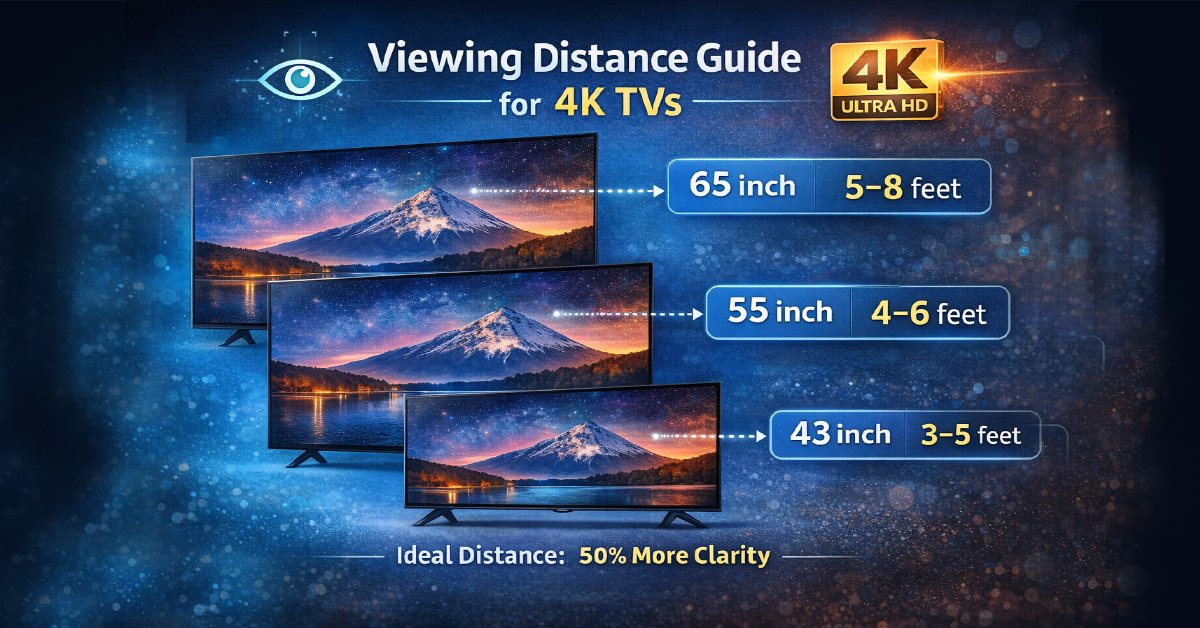
| TV Size | Ideal Viewing Distance |
| 43-inch | 3–5 feet |
| 55-inch | 4–6 feet |
| 65-inch | 5–8 feet |
Sit too far, and you won’t notice 4K. Sit closer, and the magic appears.
Does 4K Really Matter on Small TVs?
Short answer: Not always.
- 32 inches → No big difference
- 40–43 inches → Slight improvement
- 50+ inches → Huge difference
For smaller screens, a Full HD TV like this LG 32-inch smart TV review might be a more practical and budget-friendly choice.
Internet Speed & Data Usage for 4K
Recommended Speed
- Minimum: 25 Mbps
- Ideal: 50 Mbps+
Data Usage
- 7–10 GB per hour
According to Netflix, you need at least 25 Mbps internet speed for smooth 4K streaming.
Upscaling Explained (Super Simple)
Upscaling helps lower-quality content look better on a 4K screen.
Important:
It improves quality—but doesn’t turn HD into true 4K.
Common Myths About 4K
- “4K always looks better” ❌
- “You need 4K for everything” ❌
- “4K TVs are expensive” ❌
- “Internet doesn’t matter” ❌
4K vs 8K: Should You Wait?
You might be thinking:
“Should I skip 4K and wait for 8K?”
Here’s the truth:
- 8K = 4× more pixels than 4K
- Very expensive
- Almost no content available
Verdict:
4K is still the smartest choice in 2026.
Buying Guide: Who Should Buy a 4K TV?
You SHOULD buy 4K if:
- You want a 50-inch+ TV
- You stream content regularly
- You play games
You can SKIP 4K if:
- You’re buying a small TV
- You watch cable only
Also, don’t forget to choose the right smart platform—here’s a detailed comparison of Android TV vs WebOS vs Tizen to help you decide.
If you’re on a budget, you can explore our list of the best smart TVs under ₹15,000 in India for great value options.
Quick Checklist Before Buying a 4K TV
Before you buy, check this:
- ✔ Screen size (at least 43 inches)
- ✔ HDR support (HDR10/Dolby Vision)
- ✔ Smart OS (Google TV, WebOS)
- ✔ HDMI ports (2.0/2.1)
- ✔ Internet speed
Real-Life Example
Rahul → 32-inch Full HD → Minimal difference
Amit → 55-inch 4K → Cinematic experience
Size + usage = real impact
Frequently Asked Questions – About 4K Ultra HD
1. Is 4K worth it in 2026?
Yes, especially for TVs above 43 inches and streaming content.
2. Can I watch normal channels on a 4K TV?
Yes, and the TV will upscale them automatically.
3. Do I need special cables for 4K?
Yes—HDMI 2.0 or higher is recommended.
4. Is 4K better than Full HD for gaming?
Absolutely. You get sharper graphics and better immersion.
5. Does YouTube support 4K?
Yes, many videos are available in 4K resolution.
Is 4K the same as Ultra HD?
Yes, for TVs, both terms are used interchangeably.
Final Verdict: Should You Buy a 4K TV?
In 2026, 4K Ultra HD is the new standard
If you:
- Watch OTT
- Prefer big screens
- Want better visuals
It’s 100% worth it.
Bottom Line
What is 4K Ultra HD?
It’s a major upgrade in how you experience content.
Once you switch to 4K…
Going back feels like watching everything slightly blurry.
Now that you understand what is 4K Ultra HD, you can confidently decide whether it’s worth buying.