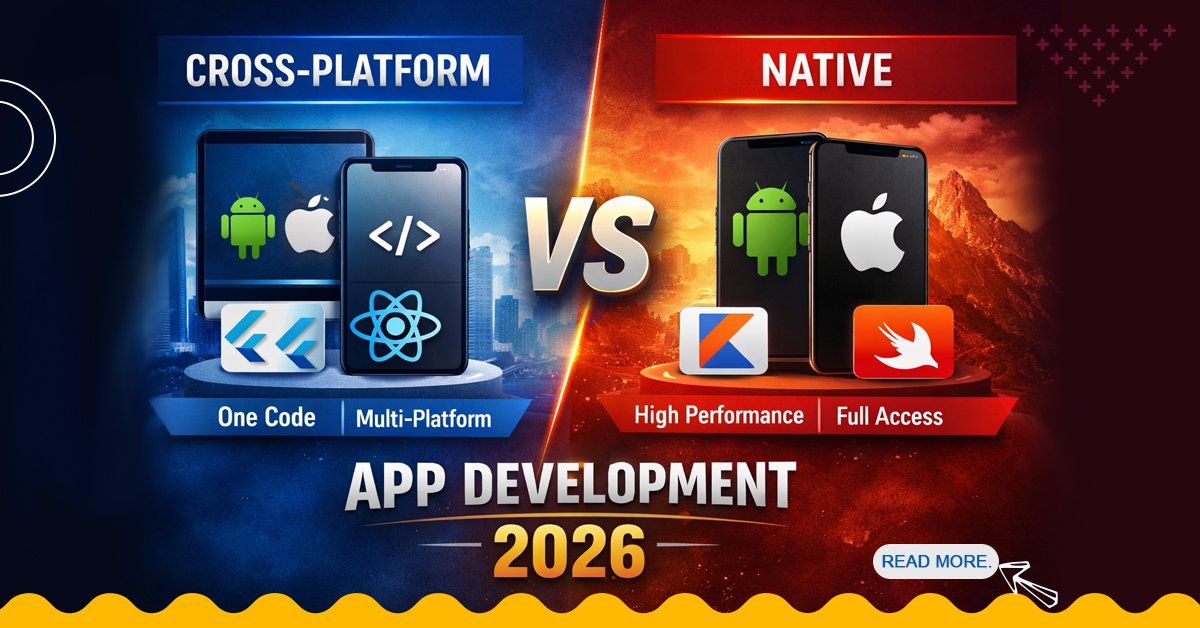
Building apps used to mean choosing sides: Android or iOS. If you wanted both, you built two separate applications, managed two codebases, hired two specialized teams, and doubled your maintenance workload.
Cross-platform app development changed that equation.
Today, businesses, startups, and even solo developers can create apps that run on multiple platforms using a single shared codebase.
But what does that actually mean?
Let’s break it down in simple, practical terms.
- 1 Quick Answer
- 2 Understanding Cross-Platform App Development
- 3 How Is This Different from Native Development?
- 4 How Cross-Platform Development Works
- 5 Why Businesses Choose Cross-Platform Development
- 6 Real-World Examples
- 7 Key Benefits of Cross-Platform Development
- 8 Common Tradeoffs & Limitations
- 9 Cross-Platform vs Hybrid Apps
- 10 When Cross-Platform Development Makes Sense
- 11 When Native Development May Be Better
- 12 Choosing the Right Cross-Platform Framework
- 13 Frequently Asked Questions (FAQs)
- 14 About This Guide
- 15 Conclusion
Quick Answer
Cross-platform app development is an approach where developers build applications that work on multiple operating systems (like Android, iOS, web, and desktop) using one primary codebase instead of separate native apps.
Understanding Cross-Platform App Development
At its core, cross-platform development focuses on code reusability.
Instead of writing:
- Kotlin/Java for Android
- Swift for iOS
Developers write most of the app once using a framework such as:
If you’re exploring which framework fits best, you may find this helpful:
👉Flutter vs React Native in 2026
👉Best Cross-Platform Frameworks in 2026
The framework then helps the app run across platforms.
How Is This Different from Native Development?
Native App Development
Apps are built specifically for one platform:
✔ Best possible performance
✔ Full hardware access
❌ Separate codebases
❌ Higher development cost
Cross-Platform Development
Apps are built once, deployed everywhere:
✔ Faster development
✔ Lower cost
✔ Easier updates
❌ Possible performance tradeoffs
❌ Some native integrations required
How Cross-Platform Development Works
Different frameworks achieve cross-platform compatibility using different technical approaches.
Most cross-platform frameworks operate in one of three ways:
Framework draws UI itself rather than using native components.
✔ Consistent visuals
✔ Smooth animations
✔ Same look everywhere
2. Native Component Bridge (Example: React Native)
Framework communicates with native UI components.
✔ Platform-native appearance
✔ Reuse JS logic
Native Controls Abstraction (Example: .NET MAUI)
Framework maps UI to platform-native controls.
✔ Strong enterprise integration
Why Businesses Choose Cross-Platform Development
Cross-platform development is rarely about “cool technology.”
It’s about business efficiency.

1. Faster Time-to-Market
Launching simultaneously on Android + iOS:
✔ No need to wait for second app
✔ Early user feedback
✔ Competitive advantage
Choosing the right framework is critical here:
👉Best Cross-Platform Frameworks in 2026
2. Lower Development Costs
Instead of two full teams:
✔ Smaller team
✔ Less duplicated work
✔ Reduced QA overhead
3. Easier Maintenance
Bug fixes and updates:
✔ Implement once
✔ Deploy everywhere

4. Wider Audience Reach
One product → many devices:
✔ Android
✔ iOS
✔ Tablets
✔ Desktop
✔ Web
Real-World Examples
Cross-platform development is everywhere:
Startup MVPs
Early-stage companies:
✔ Limited budget
✔ Need quick validation
✔ Choose Flutter / React Native
Framework comparison:
👉Flutter vs React Native in 2026
Enterprise Apps
Internal dashboards & tools:
✔ Data entry
✔ Forms & reports
✔ Often built with .NET MAUI
Games & Interactive Apps
Built using Unity
✔ Mobile
✔ Console
✔ Desktop
Desktop & Embedded Software
Built with Qt
✔ Cross-platform desktop tools
Key Benefits of Cross-Platform Development
- Code Reusability
Majority of logic shared. - Consistent User Experience
Especially with Flutter-style rendering. - Reduced Development Time
One build cycle instead of many. - Easier Team Scaling
Unified tech stack.
Common Tradeoffs & Limitations
Let’s be realistic — nothing is perfect.

1. Performance Variations
For most apps → negligible
For graphics-heavy apps → noticeable
For performance differences between major frameworks:
👉Flutter vs React Native in 2026
2. Native Feature Access
Some APIs require:
✔ Plugins
✔ Native bridges
3. Larger App Sizes
Particularly with engine-based frameworks.
4. Dependency on Framework Ecosystem
Framework stability matters.
Cross-Platform vs Hybrid Apps
These terms often get confused.
Hybrid Apps
Built using web technologies inside a wrapper.
✔ HTML / CSS / JS
❌ Lower performance
Cross-Platform Apps
Built using specialized frameworks.
✔ Closer to native performance
✔ Better UI responsiveness
When Cross-Platform Development Makes Sense
Cross-platform is ideal when:
✔ Budget constraints exist
✔ Multi-platform launch required
✔ App logic largely shared
✔ UI complexity manageable
When Native Development May Be Better
Consider native if:
✔ Extreme performance required
✔ Heavy hardware integration
✔ Platform-specific UX critical
Choosing the Right Cross-Platform Framework
Selection depends on:
Team Expertise
JS team → React Native
C# team → .NET MAUI
Design/UI focus → Flutter
Helpful framework overview:
👉Best Cross-Platform Frameworks in 2026
Performance Needs
Standard apps → Any major framework
Animation-heavy → Flutter advantage
Long-Term Maintenance
Evaluate:
✔ Community activity
✔ Update frequency
✔ Vendor backing
Frequently Asked Questions (FAQs)
Is cross-platform development better than native?
Not universally. It depends on performance needs, budget, and project goals.
Do cross-platform apps perform like native apps?
For most business and consumer apps, yes. Highly complex graphics apps may still benefit from native development.
Which industries use cross-platform development most?
Startups, SaaS platforms, enterprise tools, education apps, and eCommerce.
Is cross-platform development good for startups?
Absolutely. It reduces cost, accelerates launch, and simplifies iteration.
What is the biggest advantage of cross-platform development?
Code reuse and faster multi-platform deployment.
About This Guide
This article is based on practical software development patterns, framework documentation, and real-world usage across startups and enterprise environments.
Conclusion
Cross-platform app development has evolved from a cost-saving shortcut into a mainstream strategy.
It allows teams to:
✔ Launch faster
✔ Reduce engineering costs
✔ Maintain one codebase
✔ Reach more users
While tradeoffs exist, modern frameworks have narrowed the gap significantly.
The smartest approach is:
👉 Understand your project needs
👉 Evaluate team strengths
👉 Prototype before committing
Because success depends less on the approach itself — and more on how effectively you execute it.